
By Nick Wurst
SMART-TD local 1473 & Railroad Workers United (personal capacity)
Worcester, MA
The working class is in the grips of a massive cost-of-living crisis. Gas prices are skyrocketing due to the US-Israeli assault on Iran and Lebanon. Utility bills are climbing as heat waves hit much of the US. Corporations are pressuring the working class from all sides, increasing productivity, privatizing, rolling back past gains, and charging as much as possible for goods and services. Wages are not keeping up, for both union and non-union workers.
The Trump administration is on an all-out offensive against workers’ interests, from the attacks on public-sector jobs to ICE terror to deadly and costly foreign wars. The anti-Trump opposition in the streets is limited to episodic protests organized by loose, liberal formations. Many working-class and young people see unions as a way to try and fight for a better life not just on the economic front, but politically as well. In response to federal agents murdering anti-ICE activists in Minneapolis early this year, many looked to the unions and the call for a general strike as the answer.
Unfortunately, the labor movement still lags behind where it needs to be. An estimated 56 million workers would join a union if given a chance, but there are only 16.5 million workers represented by unions. The labor movement is barely maintaining its current density thanks to a conservative organizing approach that doesn’t meet the scale of the task. The optimism of a few years ago around organizing efforts like at Starbucks and Amazon, and the reform movements in the United Auto Workers (UAW) and Teamsters, seem very distant.
It’s clear that a breakthrough is needed for our unions.
In 2025, union density increased 0.1%, back up to the 2023 level of 10% but still far off from the peak of 33.5% in 1954. The number of union elections in 2025 dropped nearly 30% compared to 2024 and the total number of workers who got a chance to vote in a union election dropped by over 40%. Long waits for first contracts undermine important union organizing victories. Layers of workers can become disillusioned by the average of nearly 500 days for successful first contract campaigns, if first contracts are won at all. No labor law forces corporations to settle and sign first union contracts.
Unions need to think creatively about how to turn the massive amount of public support for the labor movement into gaining more union members and winning first contracts. The challenges faced by the labor movement are fundamentally political problems which need political solutions. Union busting and anti-union labor law are tactics being employed by a capitalist class which has a vested interest in not just extracting maximum profit, but preventing workers from gaining economic or political power.
What Does Socialism Have to Do With It?
It’s no mistake that socialism continues to grow in popularity including many looking at building unions as part of the fight for socialism. Socialists have been involved in the unions from day one and played key roles during the labor movement’s strongest moments and when labor was facing historic crises.
Every significant upsurge in the labor movement happened when the left and mass social movements were on the rise. In the early 20th century, regional labor parties and the Socialist Party strengthened the labor movement. The growth of the Communist Party and other left groups was central to the organizing of mass industrial unions and the Congress of Industrial Organizations (CIO) in the 1930s. A large increase in public-sector union organizing in the late 1960s and 1970s was infused with the militancy of the Civil Rights and Black Power movements and the mass anti-Vietnam war protests.
A socialist understanding of capitalism points towards tactics like general strikes and a workers’ party and poses the question of a fundamentally different way of organizing society in order to end the exploitation of the working class once and for all.
General Strikes and Organizing Breakthroughs
The general strike is a powerful weapon that needs to be wielded again. During the Great Depression, when the unions faced an existential threat from the unemployment and economic crisis combined with conservative union leadership, three general strikes helped open the door to the construction of new, mass industrial unions and the Congress of Industrial Organizations. All three general strikes in 1934 (Minneapolis Teamsters, Toledo Auto-Lite, and West Coast Longshoremen) were not deliberately organized as general strikes, but instead began as strikes by a single union, often over relatively modest demands. They quickly grew to become general strikes of mass solidarity from other workers. Those crucial strikes kicked off a wave of labor activism in the 1930s and 40s, leading to the peak of union power in the late 1940s and early 1950s.
Currently, most new organizing efforts go through the restrictive National Labor Relations Board (NLRB) process, instead of tactics like striking for union recognition, which were the catalyzing event for many general strikes in US history. In the current moment of massive support for and interest in joining unions, a strike for recognition at a major workplace could draw the support and solidarity of the broader working class and open the door for huge breakthroughs.
General Strikes to Fight Back Against Trump
Other general strikes developed around a common demand that applied to a broad layer of workers in different work places or unions, such as the call for the 8-hour work day or demands for wage increases. This January, Minneapolis showed that the idea of using a general strike to fight back on political lines is popular.
Our unions should begin planning immediately for an offensive against the Trump regime and the corporate class. Between the labor movement and ongoing anti-ICE, anti-war, and anti-Trump demonstrations, millions of working-class people are willing to fight and could be united into a powerful mass movement.
A campaign of escalating actions over the coming months should be planned by the AFL-CIO and individual unions, centered around key demands. The campaign could be run through democratic meetings from the local to the national level to determine demands and a course of action for the labor movement.
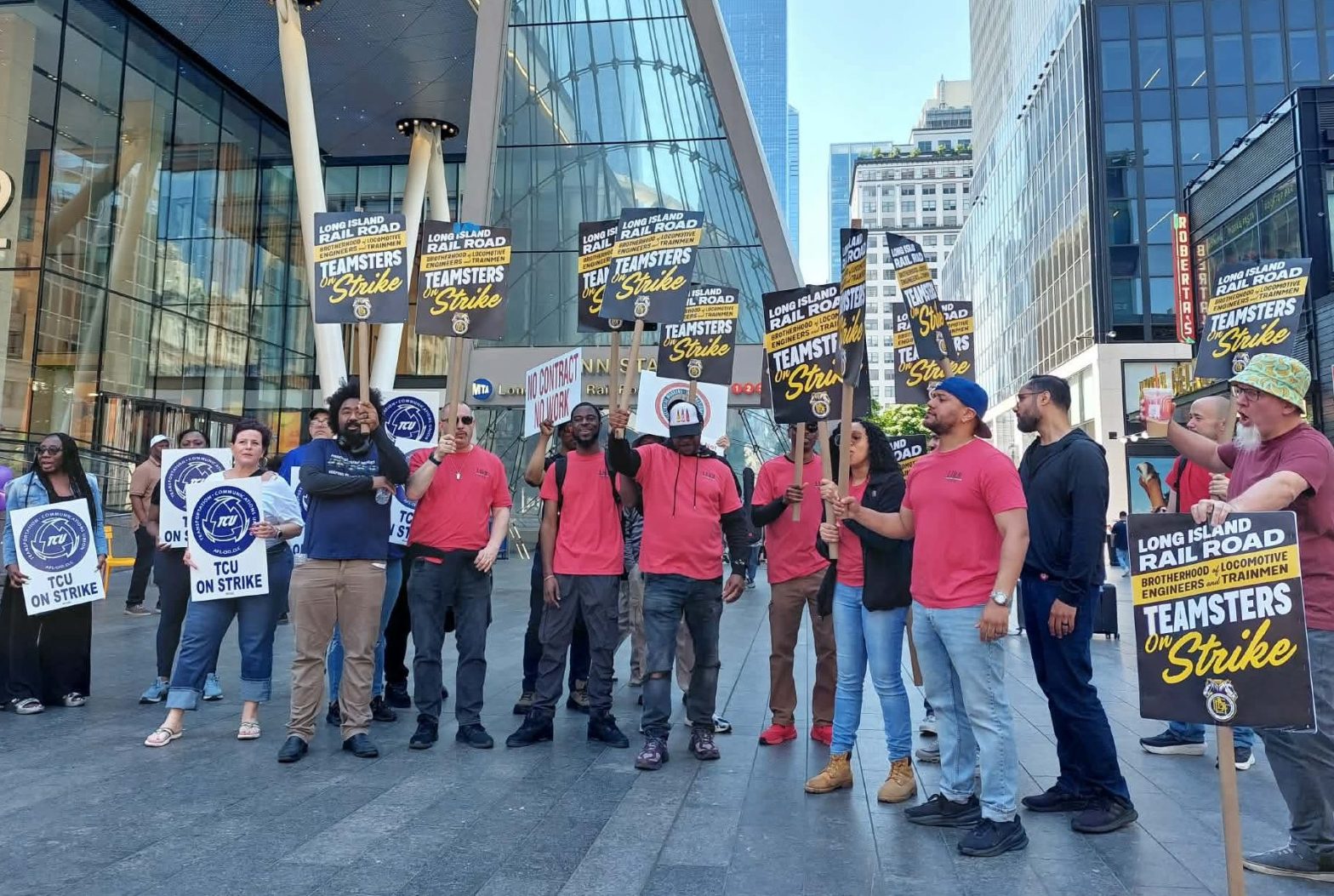
Actions could start small, with standouts, protests, informational pickets, and public meetings to help to build up confidence and power among union members and allies. The next phase could include mass demonstrations, marches, and more, building towards a 24-hour general strike. A 24-hour general strike could be a warning shot, letting the capitalists know that unless key demands are met, longer-term strikes will be organized. Some of these demands could include:
- End the useless and costly imperialist wars. Slash the military budget! Money for jobs, wages, healthcare, housing, and more.
- Abolish ICE! Close the ICE prisons.
- Overturn the Taft-Hartley Act, and pass the PRO Act! Lift bans on the right to strike for all workers. Abolish Right-To-Work laws and restore union rights to federal workers
- $30/hr federal minimum wage. Price controls on necessities like groceries, healthcare, housing, etc.
Overcoming Legal Hurdles
If a tactic is successful in helping workers win, the corporations will hire politicians to make it illegal. This comes in the form of anti-union labor law designed to make it more difficult to organize unions or to use effective strike tactics.
The Taft-Hartley Act of 1947, which outlawed solidarity or “sympathy” strikes, the labor movement’s greatest weapon, was a direct response to the militant action of workers in the 1930s and 1940s including general strikes. Many of the successful strikes of the past have been illegal, from the wildcat strike of postal workers in 1970 to the “Red for Ed” and other educators’ strikes in 2018-2019.
Laws like the Taft-Hartley Act are cited as a reason why unions can’t use militant tactics, and labor leaders claim we have to win better labor laws before going on the offensive. In reality, pro-union labor law is a byproduct of a powerful labor movement, not the reverse. Unions have been on a long decline for decades. The choice unions face now is to fight, going beyond the limits of the law if necessary, or fade into irrelevance.
Supporting the Corporate Parties Doesn’t Win Pro-Union Labor Law
The current political strategy of the labor movement is to win favorable labor laws through contributing money, organizing staff, and other resources to the election campaigns of the Republicans and Democrats. In four of the last five election cycles, unions spent more than $200 million on the elections. In all five, more than 85% of that money went to the Democratic Party.
These hundreds of millions of dollars to either corporate party have not increased union density or improved living standards for most workers. Despite unions’ endorsements and resources, the flagship labor laws that the last two Democratic presidents promised never materialized. The Employee Free Choice Act (EFCA) and the Protect the Right to Organize (PRO) Act were never passed under Obama and Biden, despite the two years of Democratic control of the House, the Senate, and the Presidency (sometimes called a “trifecta”) that both of their administrations had. It’s not just about introducing new laws, but overturning old anti-union laws. The Taft-Hartley Act has never faced a serious attempt to overturn it in the 24 years of Democratic “trifectas” since it was passed.
Unions Need a Party of, by, and for Workers
The labor movement needs its own political party, independent of capitalist money and corporate parties. A workers’ party could bring existing unions together and unite them with the broader working class to organize coordinated campaigns and action. It would be democratically controlled by and accountable to its working-class membership, and campaign on working-class issues.
In order to defend itself against corporate influence, a workers’ party would need to keep totally clear of the Democratic and Republican parties and have a fundamentally different internal structure, driven by rank-and-file democracy. This kind of political independence would help recruit members disgusted by both parties while also protecting party democracy and enforcing accountability of party candidates, officers, and staff.
Gallup has shown around 60% of all Americans, and usually more than 70% of independents, are in favor of a third major political party. In 2024, support for the labor movement polled at 70%. If translated into vote shares for a workers party candidate in the last presidential election, it would have equaled 107 million votes, over 30 million more votes than either the Democrats or Republicans received. The Census Bureau estimates that there are more than 100 million adults in the United States who did not vote. A significant number of non-voters could be attracted to the program of an explicitly pro-union, working-class political party.
Many unions have political resources like voter registration databases and canvassing efforts by union member volunteers. A new party backed by a major union would immediately be a serious force and could establish ballot access, meet registration requirements, and get matching public funding.
Union resources could identify, right now, some key races in 2028 and recruit union members and working-class activists to run in those races independent of the Democrats and Republicans. These campaigns could help lay the foundation for building a workers’ party, even just at a city or state level.
The labor movement needs to be the backbone of organizing a mass workers’ party in the U.S. Beginning the process of forming a workers party will immediately push politics to the left and would add power to struggles for essential reforms like a $30 per hour minimum wage and free, universal healthcare even without initially winning legislative majorities. Social benefits are weak in the U.S. mainly because there’s no mass political party for working people. Workers’ parties (labor, socialist, communist) in many other countries were essential to winning free or heavily subsidized healthcare, childcare, higher education, and housing benefits.
A party representing the working class and backed by unions will need to operate differently. Mobilizing party members in support of party candidates, strikes, mass protests, and union organizing would set the new workers’ party apart from the two corporate parties. A workers’ party could unify union and non-union workers and build active solidarity between unions. Neither the Democrats or Republicans organize mass protests or strikes for fear of losing control or damaging the so-called legitimacy of the corporate political system.
What gives unions their power to negotiate contracts or defend their members is the threat of workers’ action which would affect the profits of the capitalists. A workers’ party could use that same power to back up its program and demands, defeat anti-worker legislation, challenge imperialist wars and stop ICE raids, demand funding for public programs, and overcome political obstacles set up by billionaires and corporations.
Socialism Shows the Source of Workers Power
A workers’ party and a strong labor movement aiming to fight back against exploitation and inequality will need a clear understanding of how capitalism functions and how to use workers’ power to achieve its aims. Capitalism uses and abuses labor and nature on a world scale, exploiting cheap labor and natural resources around the globe for short-term maximization of profits, no matter the cost to people and the environment.
The role of workers in the production and distribution of goods and services, and their ability to withdraw that labor through strike action, gives the working class its potential power if organized. Unions developed as defense organizations of the working class, a way of fighting together to improve pay, hours, and working conditions. But even when forced to give some concessions to workers, no reform is ever safe under capitalism because all reforms interfere with the capitalist’s constant drive to maximize short-term profits.
Unions fight for higher wages and other gains and defend them against assault, but in a war, the goal is not to go on fighting battle after battle over the same terrain, but to end the war. Ultimately, the job of unions and the working class should be to end exploitation, not just continually skirmish over the severity of exploitation.
Socialist analysis leads to conclusions about the best tactics to fight back, as well as a vision of what could replace capitalism: bringing the economy and society as a whole under the control of the working class through democratic planning of labor power, social production, and distribution for human needs and a healthy environment.
Workers’ and capitalists’ interests are fundamentally opposed, which makes “win-win” agreements between unions and corporate bosses impossible. Many union leaders see their job as being partners with the company. They are eager to avoid open conflict with the corporate CEOs and prefer backroom, concessionary deals. They lack confidence in union members being willing to protest or strike for union recognition or good contracts. Union leaders who are anti-socialist or who don’t know about socialism lack the analysis, tactics, and vision to strengthen the labor movement.
Socialists have always been among the best fighters for the working-class. This vision of an alternative economic system that working people could democratically control results in socialist union activists and leaders pushing the envelope with tactics and militancy. Socialists link individual issues and campaigns to build the maximum solidarity and unity of the working class. Socialist ideas, analysis, and tactics are essential to union organizing, contract battles, and organizing independent political action of unions and the working class. We argue that labor activists need to be socialists and get active in the fight for socialism, but also that all socialists should get involved in the labor movement as open socialists.

