
No Invasion, End the Sanctions!
By Claire Bayler & Jack D.
(Worcester, MA / Maine)
Trump and his administration say “Cuba’s next” following the vicious U.S. and Israeli attack on Iran. The Trump administration has moved aggressively in the interests of U.S. capitalism and imperialism with the kidnapping and replacement of Venezuela’s president in January and the war jointly launched with Israel against Iran. The U.S. is actively pursuing regime change in Cuba—a second “Bay of Pigs”-style attempt to invade could well be on the horizon. Trump has said, “I do believe I’ll be … having the honor of taking Cuba. […] Whether I free it, take it, I think I can do anything I want with it.” These intense escalations of long-standing U.S. policy aim to prop up declining U.S. imperialism, to raise profits using oil from Venezuela and Iran, and to overthrow what U.S. corporations see as threats in the form of non-capitalist Cuba. ISG calls for U.S. unions, anti-ICE and anti-war protestors, and the broader working class to organize mass protests to oppose imperialist wars, to prevent an invasion of Cuba, and to demand an immediate end to the economic blockade against Cuba.
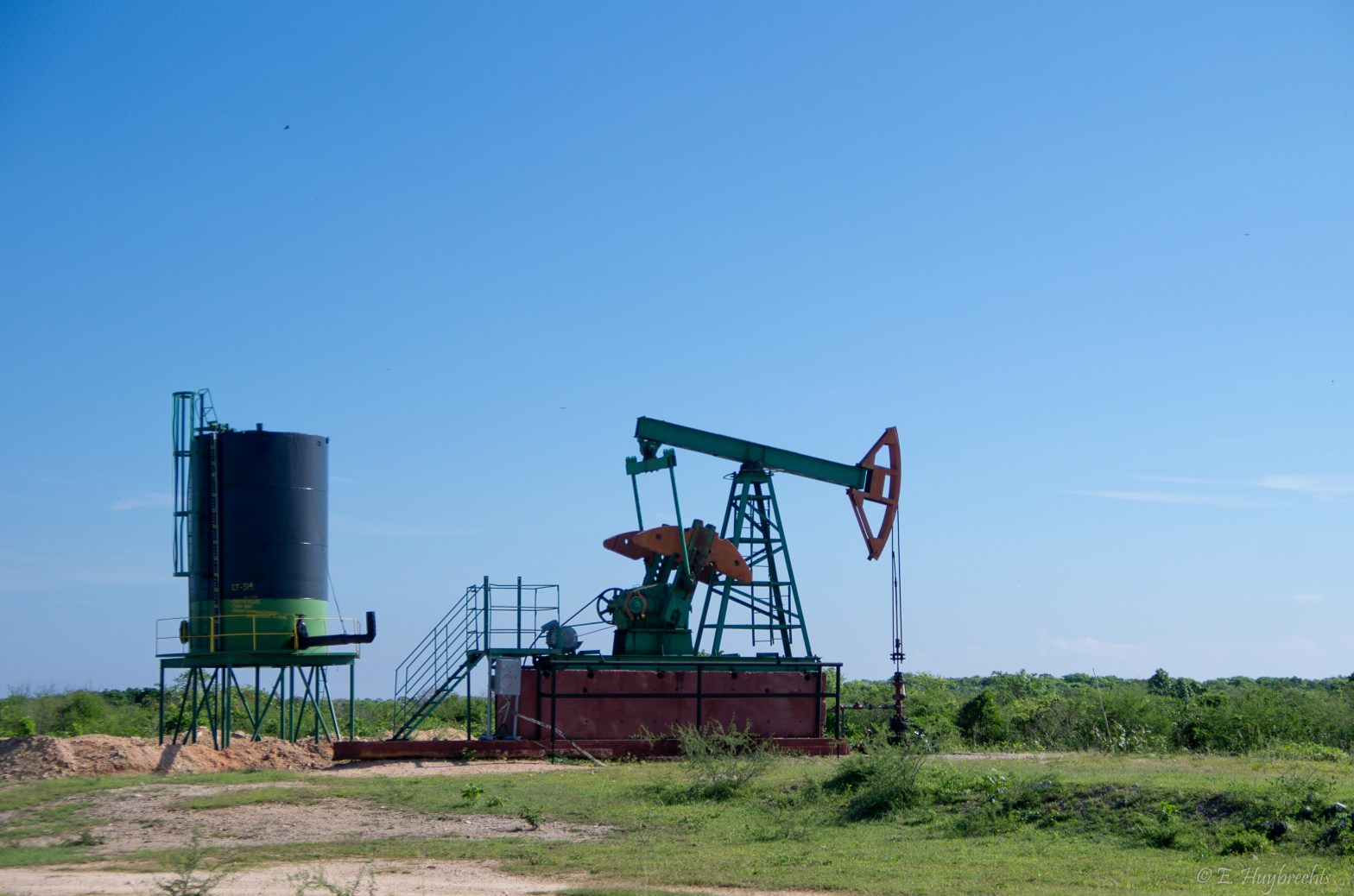
Trump’s military action in Venezuela and threats of tariffs against Mexico (and any other countries exporting oil to Cuba) have instituted a brutal energy blockade. Cuba’s energy grid has collapsed and fuel shortages cripple the most essential services including hospitals, food supply, and utilities. Cuba is now facing the worst economic and humanitarian crisis since the “Special Period” following the fall of the Soviet Union in 1989-1991, whose aid and trade deals underpinned the Cuban economy for decades following the 1959 Revolution. Before Trump’s attack, Venezuela supplied an average 46,500 barrels/day and Mexico supplied 17,200/day out of the more than 60,000 barrels/day Cuba needs to import for transportation, agriculture, and water supply.
According to Trump, “Cuba’s at the end of the line…They have no money. They have no oil. They have a bad philosophy.” The 64-year bipartisan economic embargo, which has cost Cuba an estimated $1 trillion and decimates living standards, shows that the Republican and Democratic Parties are united in their common interest of crippling and re-privatizing the Cuban economy. The U.S. government’s longstanding calls for “economic freedom” in Cuba mean, in reality, freedom for U.S. corporations to loot the resources and exploit the labor of Cuba for private profit. There is also a rhetorical victory when countries buckle under the overwhelming pressure of sanctions, war, sabotage, and isolation, because capitalist regimes can point to them as the inevitable failures of socialism. This process of capitalist restoration has been happening for decades but a significant development caused by the recent brutal escalation has been the legalization of “private-public partnerships”.
- “Washington’s strategy toward Cuba appears to be different—not a war like the one unleashed in Iran, a country with the world’s third‑largest fuel reserves; nor an attack like the one carried out in Venezuela, which sits atop the world’s largest reserves and has roughly 2,000 times more oil than Cuba. The approach for the island is one of suffocation, like taking the respirator away from a patient on life support.” (El País, 03/14/2026)
The Gains & Limitations of the Cuban Revolution
For more in-depth material about Cuba, click here
The Cuban Revolution in 1959 kicked out the brutal U.S.-backed dictator Fulgencio Batista and won massive gains for the working class and peasantry including nationalizing the oil and sugar industries, raising standards of living, establishing free healthcare and education, and launching a mass literacy campaign. The Castro regime initially intended to free Cuba from the control of foreign (mainly U.S.) corporations, not overthrow the capitalist system. But “through a combination of the pressure of the Cuban masses and hostility from US imperialism, terrified as it was of ‘socialism on its doorstep’, the new Cuban government nationalised most of the economy. This included all the major industries and much of the private property owned by U.S. capitalists [valued at $900 million USD ($10 billion in 2026)] and, in some cases, organised crime… Cuba established a planned economy which made all the economic and social gains possible.”(SocialistParty.org.uk, 01/23/2019)
Under the Kennedy administration, the U.S. launched an armed intervention in 1961 with the Bay of Pigs invasion and subsequent terrorist attacks carried out by the CIA and right-wing Cuban exiles as it attempted to regain control. Cuba sought the support of the Soviet Union, which had, under Stalin and his successors, deteriorated into a bureaucratic dictatorship. The USSR’s influence, combined with the absence of genuine workers’ democracy, meant the Cuban planned economy developed as a top-down bureaucratic model similar to the deformed workers’ states in eastern Europe and the Soviet Union itself. Without key workplace and political democracy—and successful socialist revolutions in other countries—Cuba was held back from winning further gains for workers.
The Cuban people have seen a long erosion of the gains of the revolution. Over the decades of economic isolation, the Cuban regime introduced incremental steps towards capitalist restoration, opening up certain sectors to private ownership, especially small and medium-sized businesses. Tourism became a significant part of the economy, and the government opened the country up to foreign investments. Cuba joined China’s Belt and Road Initiative in 2018, leading to major transportation, port infrastructure, and telecoms projects – funded and owned by Chinese capital for the purpose of profit.
In response to the recent aggression by the U.S., Cuba legalized (in early March) “public‑private enterprises” which would have the “authority to decide what goods and services to offer, and to set prices and wages.” In response, the Trump administration began allowing U.S. companies to send fuel to private businesses in Cuba and issuing licenses for businesses to sell Venezuelan oil to non-government entities.
U.S., Chinese, or any corporations controlling the Cuban economy would not fundamentally solve the problem of poverty for the Cuban masses. In Haiti, as one example, capitalism and U.S. imperialism have caused a prolonged economic and humanitarian crisis. Cuba will not be able to resist U.S. imperialism and the full restoration of capitalism by relying on “sympathetic” capitalist states like Russia, or “state-capitalists” like China, which pursue their own imperialist interests as the other two major poles of geopolitical power. Only by rebuilding a mass working-class movement can Cubans take the economy under full democratic workers’ control of the economy and overcome the limitations inherent to a top-down bureaucracy running a planned economy and defending against imperialist pressure.
Socialism can’t survive in one country alone. No single country can resist the economic and military power of global capitalism, or provide a good standard of living, on its own resources. Defending the gains of the Cuban revolution needs to be part of a mass international movement for revolutionary socialism. The struggle against capitalist and imperialist interests governing the region will need active solidarity across borders to achieve real self-determination, safety, workers’ democracy, and high-quality living standards for all.
The Independent Socialist Group Calls For:
- No invasion of Cuba! The U.S. working class needs to organize mass protests and labor strikes against U.S. imperialism and war-mongering against Cuba.
- Immediately lift all sanctions. Stop starving the Cuban people!
- U.S. military out of the region! Bring the troops home now. Close the torture site and military base at Guantanamo Bay, and return the land!
- Drastically cut the U.S. military budget to instead fund public services.
- Organize a U.S. workers’ party to have an alternative to the corporate, pro-war politics of the Republican and Democratic Parties.
- Rebuild a mass workers’ movement in Cuba to defend the remaining gains of the revolution and to fight for full democratic workers’ control of the economy and state.
- Independent working-class politics and building a revolutionary socialist movement will be the only way to stop the endless wars that capitalism and imperialism use to maintain their rule. For a socialist federation of Latin America as a step towards a socialist world.
 Independent Socialist Group