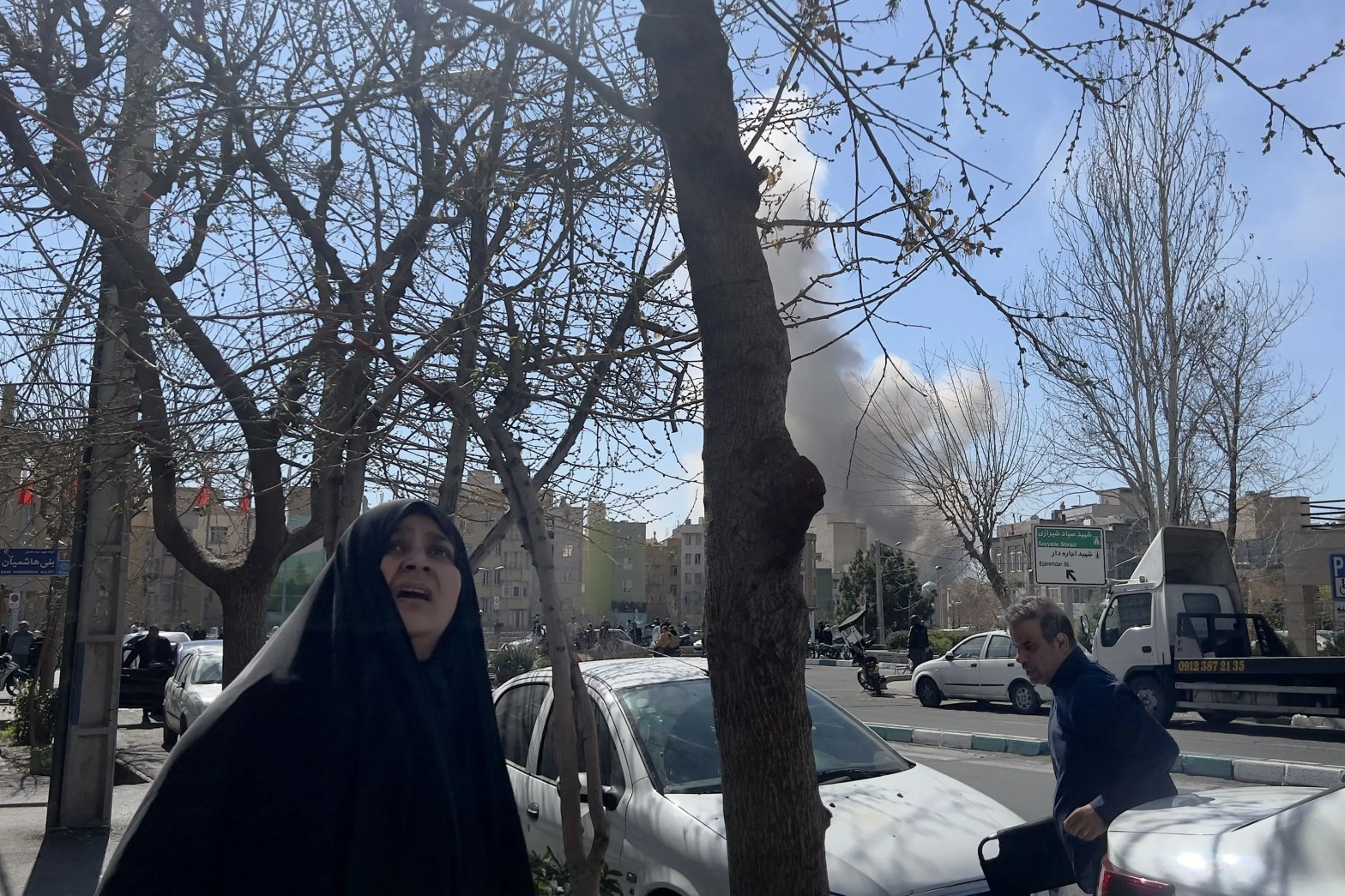
(image: Wikimedia Commons, 3 Mar 2026, Tehran – The Fourth Day of War, محمدعلی برنو)
By Peggy Wang
Massachusetts Teachers Association, personal capacity
Boston, MA
The horrors of capitalism are wreaking havoc in the bloody, needless war on Iran. The US and Israeli governments are ruthlessly raining bombs across the country and have killed over 1,400 Iranians and displaced up to 3.2 million as of the time of this writing. The brutality was spelled out on the very first day of the aggression, when the U.S. military murdered at least 165 civilians, mostly schoolgirls, in an airstrike. Israel, having decimated Gaza, is expanding its violent military domination in the Middle East, annexing the West Bank and starting a ground invasion into Lebanon, killing over 850 people and displacing over a million. Iran has conducted retaliatory strikes on Israel, U.S. military bases, and other targets that Iran claims are involved in supporting U.S.-Israeli attacks.
Imperialist wars know no bounds. Capitalism willingly murders thousands, even hundreds of thousands, in its pursuit of profit, access to natural resources, land, trade routes, markets, and cheap sources of labor. No price is too high or too heavy to pay. This is a death sentence for many of the working class worldwide who stand in the crossfire with no way to escape. They have nothing to gain from these wars, but have everything to lose.
Blood for Oil
Following the U.S. murders of over 150 innocent civilians in the Caribbean and Eastern Pacific, the capture of president Nicholas Maduro, and the opening up of Venezuela’s vast oil reserves to U.S. corporate interests, the Trump regime set its sights on Iran for control of its oil and to dominate the Middle East economically and politically.
The U.S. and Israeli war on Iran has led to Iran’s shutdown of the Strait of Hormuz, creating the largest disruption of oil supply in history. 20% of the global supply of oil passes through the Strait. The vast majority (80%) of that oil is sent to Asia, predominantly China, India, Japan, and South Korea. Major production facilities and refineries in the region, some of the largest in the world, have been shut down, including some owned by the national oil companies of Qatar, Kuwait, the U.A.E., Bahrain, and Saudi Arabia.
Oil prices have shot up to over $100 per barrel. Further price increases are probable, and not just at the gas pump. Oil is used for heating, manufacturing, transportation, plastics, food production, and more. Petrochemicals, derived from oil, are used to make products like plastics, clothes, packaging, medical devices, fertilizers, etc., and are a major driver in oil demand.
100 million barrels of oil are consumed worldwide each day, and without the 20 million barrels that normally move through the Strait of Hormuz daily, the impact of the war will cause an increase in inflation and likely tip the global economy into a recession. The International Energy Agency, which is composed of 32 member nations, plans to release 400 million barrels of oil reserves, a third of its total reserves. But this only amounts to four days’ worth of supply needed for global consumption and will take months to transport and distribute. In parts of Asia, the fuel shortages mean schools have shut down and workers have been told to work from home.
There isn’t an easy or quick fix to the economic and environmental destruction from the U.S.-led war on Iran. Oil facilities that have been damaged or leveled cannot easily be replaced. Strikes on oil depots, refineries, tankers, etc. have sent fiery plumes of burning oil into the air and water, leaving toxic black rain falling from the sky, or left massive oil spills in the Persian Gulf. The devastation of this on human lives as well as the environment is heavy: 10 million residents in Tehran have been exposed to black rain from the March 7 Israeli strikes on oil depots and refineries.
The damage has released toxic hydrocarbons, sulfur oxides, and nitrogen compounds, likely mixed with materials from destroyed buildings such as asbestos and silica. The combination of rain, pollutants, and toxic fumes risk chemical burns, lung and eye damage, and increased cancer from benzene, acetone, toluene, methylene chloride, and other carcinogens. The black rain will pollute soil and waterways for decades.
The Horrible Violence and Waste of Imperialism
Who starts the wars? And who fights them? Who stands to gain? And who pays the price with their lives?
The U.S. war on Iran is not unprecedented. U.S. imperialism has a long track record of attacking other countries to gain and maintain control over natural resources and to defend corporate interests. The U.S. has invaded Vietnam, Korea, Iraq, Afghanistan, Panama, Grenada, Guatemala, Somalia, Venezuela, the Philippines, and many others. In Iran, the U.S. backed a coup in 1953 that overthrew Iranian Prime Minister Mohammed Mosaddegh and installed the Shah. When the Shah was overthrown by the 1979 Revolution, the U.S. enacted sanctions, sent weapons to Saddam Hussein’s Iraq in the Iran-Iraq War, and conducted strikes on the Iranian Navy following the mining of the strait during the war.
Capitalism offers no peace. It operates with bloody hands. Imperialist wars are baked into capitalism’s DNA, a feature of it, not an anomaly. The development of capitalism has led to major superpower nation-states that clash with one another for the right to plunder riches from weaker countries and to exploit workers in pursuit of the lowest labor costs and highest profits. This is violent exploitation. When the capitalist classes of the world seek to expand their hordes of wealth, they don’t allow the lives of working people to get in their way. They send working-class youth to slaughter one another. They spend billions and trillions on missiles, fighter jets, bombs, and horrific new ways to kill.
As Vladimir Lenin, one of the leaders of the Russian Revolution, wrote in his 1920 preface to “Imperialism, the Highest Stage of Capitalism,”
Private property based on the labour of the small proprietor, free competition, democracy, all the catchwords with which the capitalists and their press deceive the workers and the peasants are things of the distant past. Capitalism has grown into a world system of colonial oppression and of the financial strangulation of the overwhelming majority of the population of the world by a handful of “advanced” countries. And this “booty” is shared between two or three powerful world plunderers armed to the teeth […] who are drawing the whole world into their war over the division of their booty.
The U.S.-Israel war against Iran threatens World War III as it reaches beyond the Middle East. In Pakistan, police killed 24 civilians who protested the assasination of Ayatollah Khamenei. The U.S. destroyed an Iranian warship carrying 130 people off the coast of Sri Lanka. A Thai boat was also hit as it passed through the Strait of Hormuz.
This war and U.S. imperialism require vast amounts of resources. The U.S. spent over $11.3 billion on its war against Iran in just the first six days, and it’s estimated that the daily cost of the war is nearly $1 billion. The Pentagon has requested another $50 billion to a war budget that is already $901 billion, the highest it’s ever been. In the opening 72 hours of the war, the U.S. Navy launched around 400 Tomahawk missiles, each one costing $2 million. Each of the U.S. THAAD missile defense systems, destroyed by Iran using $35,000 drones, costs $1 billion.
U.S. imperialism is bolstered not only by massive military funding but also by armed personnel. The U.S. operates over 750 bases across more than 80 countries. In the Middle East, it maintains 40,000-50,000 troops. The cost of these foreign bases amounts to $80 billion or more per year.
This is all paid for by the labor of working people, who, through Trump’s Big Beautiful Bill, are enduring the massive gutting of our healthcare, SNAP benefits, housing and childcare assistance, and more. The nearly $12 billion the U.S. military spent in the first two weeks of war could instead fund health insurance for 1.3 million people for a year, food assistance for 5.5 million people, housing assistance for 1 million, or childcare for 900,000.
Who, or What, Can Stop US Imperialism?
Trump came into office promising to end wars, but has only brought the U.S. into more conflicts. There is little support or appetite for the U.S. war on Iran: approval among the public stands at just 27%.
Yet both the Democratic and Republican parties back the war against Iran. The Democratic Party has voiced opposition to how the war was initiated, but it fundamentally does not oppose U.S. intervention in the country. The U.S. has initiated wars in the past that violated international laws and agreements. The U.S. government, including both corporate parties, supports Israel’s genocidal war against Gaza. Under the Obama administration, the U.S. intervened in Libya in 2011 to overthrow Gaddafi and ordered airstrikes on Yemen, Iraq, Somalia, Afghanistan, and Pakistan. The Democrats have helped to build up the U.S. war machine, including approving a record-high military budget. And despite Sanders and members of “the Squad” expressing opposition to war on Iran and Israel’s genocide of Palestinians, in 2024, they still backed warmongerer Kamala Harris, who said in her DNC acceptance speech, “I will ensure America always has the strongest, most lethal fighting force in the world.”
In the U.S., the continued support for the Democratic Party from the majority of the U.S. left and union leaders means there is no vision for any real political alternative to stop Trump. Tactics like mass protests, occupations, and strikes against the war are not even considered. Union leaders tailing the Democratic Party have abandoned the need for their members to take on social struggles, isolating the labor movement from the fight within the broader working class against ICE, cuts to social programs, and the wars against Iran, Lebanon, Gaza, etc.
The crisis in leadership among the working class is international as well. Much of the left collaborates with capitalist parties and has failed to build mass left or progressive political parties. This same mistake led to the current Iranian regime in power. The millions who participated in the mass protests and strikes of 1978 and 1979 that ousted the Shah began to organize themselves into shoras, democratically-elected workers’ committees. However, the left forces, including the Tudeh (Communist) Party, allied with the Islamic opposition to the Shah. As a result, the 1979 Iranian Revolution failed to take up socialist demands including winning a democratically-run workers’ government resting on the power and authority of the shoras. Instead, the anti-worker, anti-women Islamic Republic came to rule the country. In the wake of Ruhollah Khomeini coming to power, the regime massacred thousands of activists and leftists in 1981 and 1982.
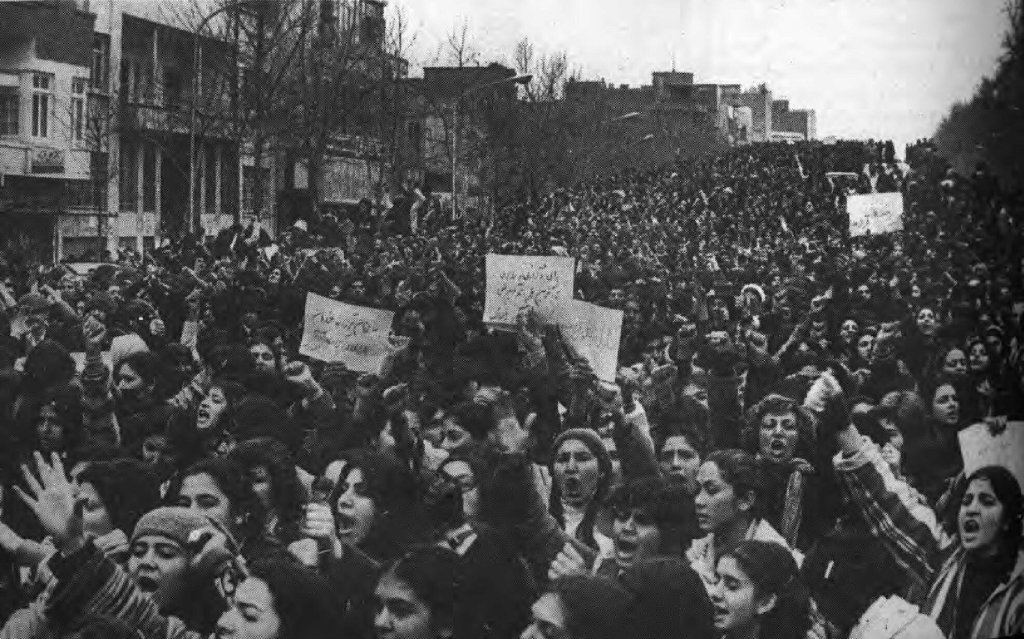
Though the Islamic Republic is fighting against the attacks of the U.S. in the ongoing war, it does not provide any sort of future for the working class of Iran, of the Arab nations, or around the world. The Iranian regime, much like the U.S. regime, has brutalized its own working class. In December, protests broke out in response to an economic crisis, due in part to years of U.S. sanctions. The majority of Iranian people suffer from low wages, heavy taxes, a devaluing currency, and annual inflation of 42.2%. Across the country, Iranians came out into the streets but were violently repressed, with thousands killed by the government. The regime severely oppresses women: in 2022, police violently beat Mahsa Amini for “improperly” wearing her hijab, leading to her death three days later. Over 19,000 were arrested in the protests that followed, and over 500 killed. The Iranian regime has also banned independent unions and persecuted labor activists and leftists. In 2007, the regime banned the teachers’ union and beat hundreds of its members when it went on strike against low pay, going so far as to kill one union member.
Still, the resistance of Iranians in recent years demonstrates the way forward. In 2021, 110,000 oil and gas workers in the country went on strike and won improvements to their pay and working conditions. The recent protests from December to February involved millions of people and continued despite internet blackouts and heavy repression. This shows the determination of Iranians to fight back against repression and rapidly declining living standards for most of the population, even before the current war was launched against the country.
A second Iranian revolution, but one along socialist lines, is necessary. However, while the attacks by U.S. imperialism and its proxy Israel against the people of Iran continue, there’s little chance of progressive or left-wing mass protest or revolutionary movements arising at this time.
The Need for Internationalism and Socialism
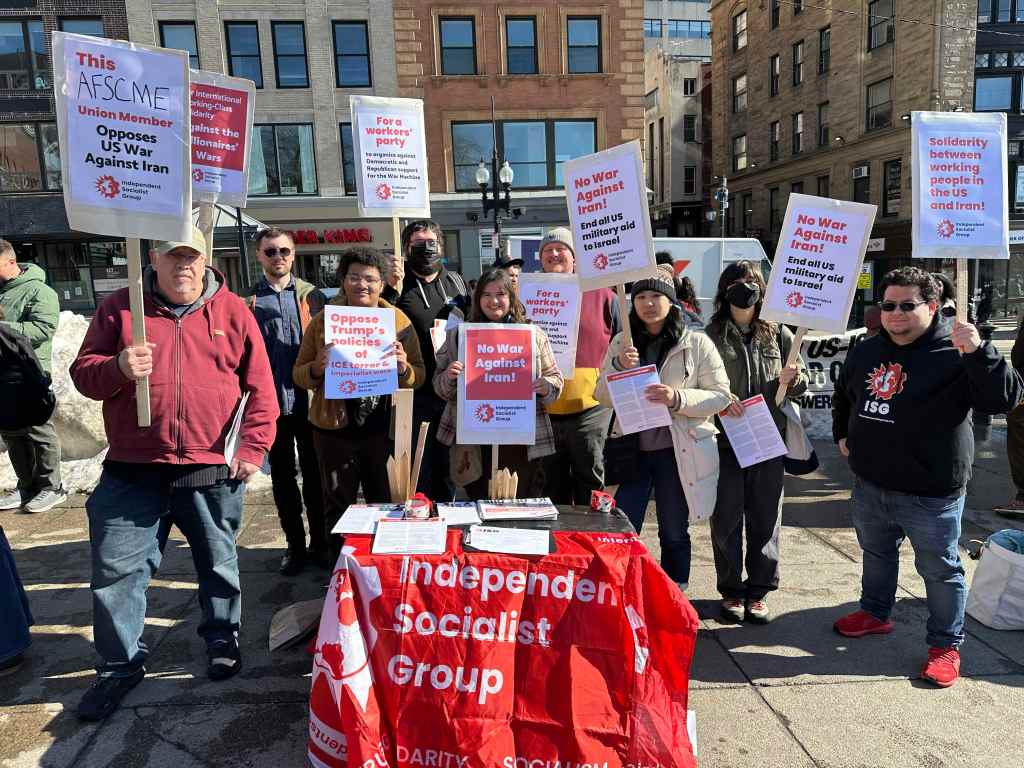
The only force capable of stopping U.S. imperialism is the working class in Iran and solidarity from working people in other countries, including in the U.S. As the war destroys more lives, whether through bombings or economic devastation, working people across borders can stand with one another and oppose wars for capitalist economic interests, even if they are wars waged by imperialist or pro-capitalist governments in our own countries. We can organize mass movements and labor actions in the streets and in our workplaces to demand an end to the war against Iran.
In the U.S., the most crucial component of a strong anti-war movement needs to be the formation of an independent political party that represents working people. We need our own political representation and political organization, a way for us to unite and fight back against both corporate political parties that back imperialist wars and astronomical military spending at the cost of our healthcare, wages, ability to pay for housing and food, etc. We don’t need more bombs or fighter jets. We need government money and resources for the needs of the working class, including housing, healthcare, and education. And we need an immediate end to the war machine.
We also need an economic alternative to capitalism – a socialist one. Capitalism proves the immense amounts of wealth that working people generate can meet the needs of all, but not while it’s under the control of a tiny minority of capitalists. But it takes fighting for true economic democracy, a socialist economy. Working people can collectively and democratically run the economy together and ensure that human needs come first, not the selfish interests of the few. We can build a world without wars, poverty, or environmental destruction.
 Independent Socialist Group
