by Jeff Booth
AFSCME Local 3650 (personal capacity)
Boston, MA
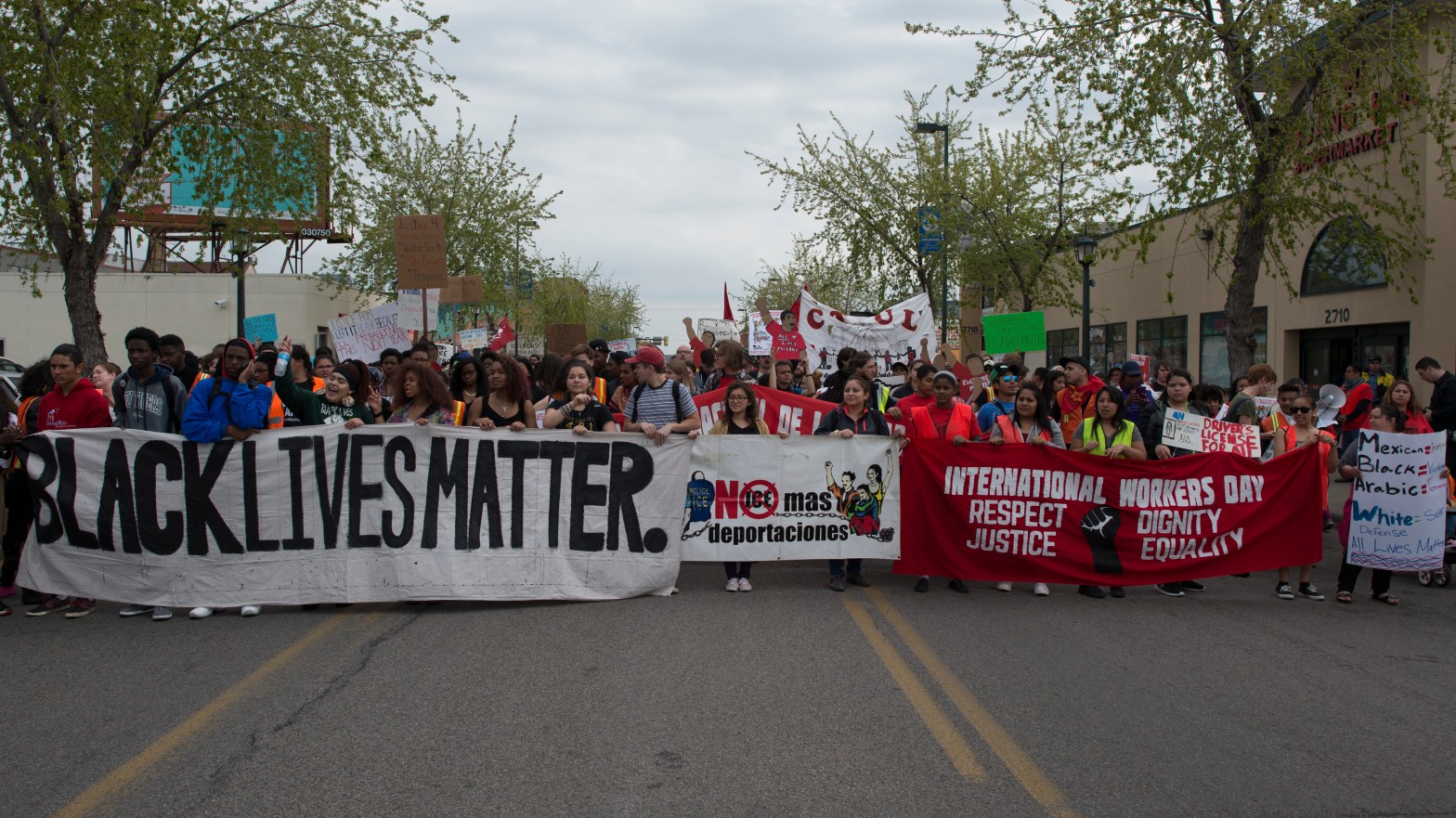
May 1st, May Day, is International Workers Day (IWD). May Day rallies will be larger than in recent years, with more union activists, workers, and youth joining the growing protest movement and resistance against Trump.
In the early days and weeks of Trump’s reign, there were important but relatively small protests on Inauguration Day, pro-union protests by federal public sector workers, and anti-Musk protests at Tesla lots. Pro-Palestinian, anti-genocide rallies continued despite severe repression against them by Biden and the Democrats and now by Trump and the Republicans.
As Vice President Musk (un-elected), Trump (who most Americans didn’t vote for), and his billionaire cabinet settled into their attacks on unions, government services, immigrants, and democratic rights, more working people joined protests like “Hands Off.” Many protestors tended to show their anger not only at the Trump regime but also at the lack of opposition by the Democratic Party.
Something to remember: the entire Senate, including all the Democrats and Bernie Sanders, voted 99-0 to confirm the appointment of right-winger Marco Rubio as Secretary of State. When the next person gets grabbed off the streets and disappears into some hell-hole prison, and when Rubio lies to the entire country about it, remember that vote.
On April 5th and 19th, millions joined protests against various Trump administration policies in many cities and small towns across the country. Some union leaders, left groups, and progressives participating in the rallies also pointed to May Day demonstrations as a next step to escalate the movement.
International Workers Day is not well known in the U.S. even though it started here. While there are relatively small rallies, protests, and public meetings in some U.S. cities every May Day, most U.S. workers are unaware of it.
The Home-Grown History of International Workers Day
In 1884, unions in the Federation of Organized Trades and Labor Unions (an early name for the AFL) called for strikes on May 1, 1886. Their main demand was for an eight-hour workday: “Eight-Hour Day with No Cut in Pay,” and the unions and Eight-Hour movement used strikes and mass public protests to force the companies to comply. The first May Day was a huge success for the labor movement, with a strike wave of 500,000 workers, including 90,000 in Chicago, marching in the streets in a show of worker power. Immigrant workers were a huge part of the strike wave. Socialists and anarchists were an important part of the labor movement, with many elected into leadership in unions and campaigns for an eight-hour workday.
Strikes and protests continued past May 1st, especially in Chicago. The strikes stopped work at most factories, but management at one big company, McCormick Harvester, brought in scabs to keep operating and to try and break the strike and the union. On May 3rd, 500 workers protested outside the factory, and police shot into the crowd, murdering four workers and injuring many more. The next day, May 4th, a mass rally of 3,000 working people in Haymarket Square demonstrated against the murders and repression. A socialist union activist, Samuel Fielden, was speaking when 180 police moved in, and a bomb exploded. The cops fired wildly into the remaining protestors, killing one worker and wounding many others. When it was over, the bomb blast had killed one cop and wounded others. The shooting by police also ended up killing other cops. All this was labeled as the “Haymarket Riots” or the “Haymarket Affair.”
Immediately following Haymarket, the capitalist class launched the first “Red Scare” in U.S. history and used police violence to suppress the strikes and demonize the left, labor, and eight-hour movements. The Democratic mayor of Chicago declared martial law. The police arrested hundreds of workers, especially socialists and anarchists, and raided unions’ headquarters. Eight left and anarchist union organizers, who were later known as the “Haymarket Martyrs,” were targeted by the capitalist class and the two capitalist political parties. The eight were vilified and lied about in the capitalist press and dragged through an extremely unfair trial. They were convicted of “conspiracy” and all but one were sentenced to death. The state murdered four, one committed suicide in prison, and two were then re-sentenced to life in prison.
Despite the violence and vicious repression against the unions and the eight-hour day movement after the first May Day strikes and mass protests, some companies had been forced to implement an eight-hour workday. The unions and the left recovered quickly, and the socialist movement grew in strength. The eight-hour day movement continued in various forms, and the May Day strikes energized and inspired the left and the labor movement in the U.S. and around the world. In 1889, the socialist Second International, a rapidly growing international organization of workers’ parties and unions, voted to declare May 1st as International Workers’ Day.
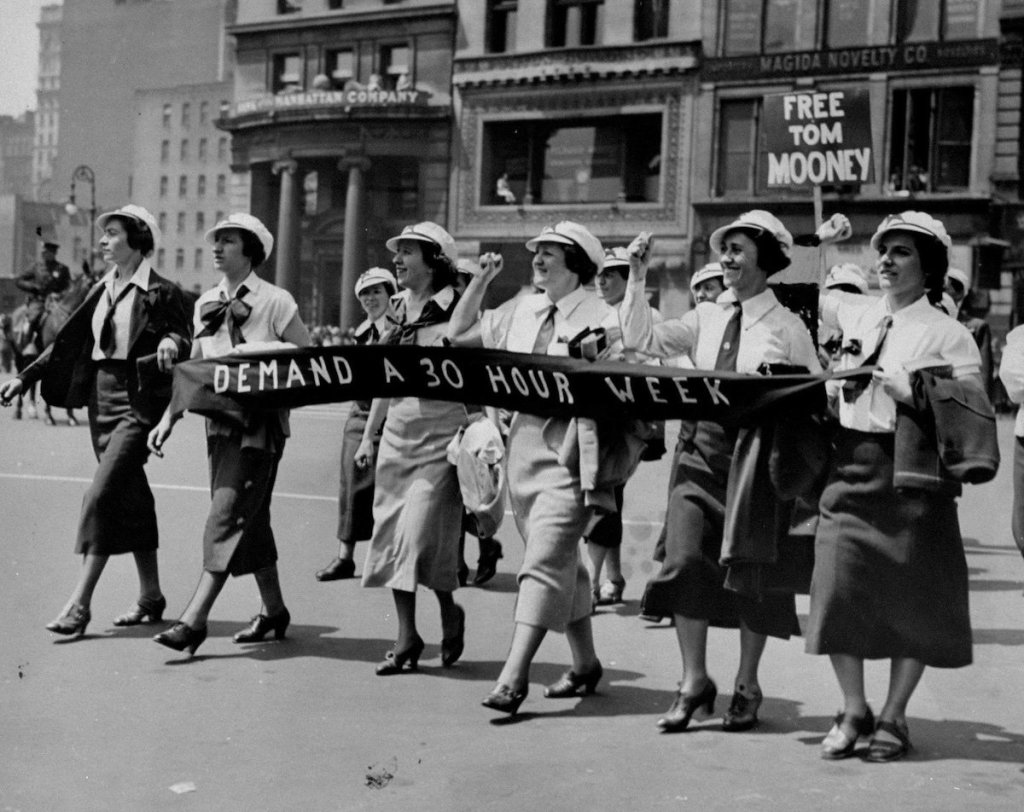
International Workers Day is often used as a day to have public meetings, rallies, and protests for workers’ rights and struggles, to support workers’ parties, and to build the socialist movement. In the U.S. this has included significant May Day protests by the Socialist Party under the leadership of Eugene Debs, during the rise of the CIO and the Communist Party in the 1930s, and also during the anti-Vietnam war protests with the largest in 1971 when tens of thousands protested in Washington DC, intending to shut down the government. 12,000 were arrested during three days of demonstrations. This protest helped end the Vietnam War. More recently, in 2006, a series of large immigrant rights protests opposed and defeated a bill trying to make “unlawful entry” into the U.S. a felony. The protests called “La Gran Marcha” and “El Dia Sin Inmigrantes” culminated in rallies on May 1st, with over 2 million people marching to defend immigrant rights, with the largest demonstrations in Chicago and Los Angeles. The protests and some strike action were successful in defeating the proposed bill and creating, for a time, more solidarity and increasing union organizing among immigrant workers.
The mass protest movements that won the most significant gains for the working class in U.S. history were usually combined with labor movement actions like strikes, workplace occupations, union organizing, and independent political action. Upsurges in the labor movement and on the left, including the influence of socialist, communist, and other left ideas, heavily influenced and strengthened movements like the struggle for the eight-hour day.
The protest movement emerging now against Trump can learn from the history of May Day, the socialist and Marxist ideas that are a crucial part of its history, and join with the organizing around IWD protests now and organization building after May 1st.
What Unions Can Add to the Anti-Trump Protest Movement
The large turnout to the Hands Off protests is very positive and shows there’s a lot of interest in getting out into the streets and actively opposing Trump. But basing the protests simply on hating Trump, while completely justified, and offering up support for the Democratic Party, again, as an alternative, won’t, even in the short term, stop, reverse, or replace Trump’s right-wing policies. Whether it’s the Hands Off or 50501 protest leaders, most union leaders, Sanders, AOC, and the rest of the Democratic Party are all really abusing the word “fighting.”
At protests, in between protests, in union meetings or communications, at rallies, or at a music festival for the rich, they all call their strategy of lawyers, legalism, lobbying (including “call your congressperson”), and support for the corporate Democratic Party as “fighting” against Trump. This isn’t “fighting.” The protests are the beginning of a fight, but they need demands, tactics, and goals that will attract more working people, including more people of color, union members, and youth.
Why do most union leaders call suing the government “fighting”? Why do they think they have to obey anti-union and unjust laws when Trump and his billionaire bros and his immigration cops break laws every day? Unions were illegal and are in the process of being outlawed again. Union leaders are hiding behind capitalist laws: one law for the rich, or no law for the rich, and another law for the working class. The mass layoffs of Federal public sector workers, the tearing up of union contracts, and the elimination of dues collection are all huge, immediate crises for the labor movement and working people. The capitalists and government will direct these anti-worker, union-busting tactics at private sector unions. Reagan fired the PATCO Union of Federal Air Traffic Controllers in 1981. This was an obvious example of an all-out attack on public sector workers. It only succeeded because union leaders refused to organize a real solidarity strike action, including a general strike. Where is the strike action now, from the Federal public sector unions and the rest of the labor movement?
With the Hands Off protests so far, what passes for a few big, inspiring, and understandable demands and strategies to build the movement around, are instead abstract slogans like “everyone deserves health care,” but without a strategy or political vehicle to achieve it. When the Democrats were in power, they put in “Obamacare,” deepening the private healthcare system and refusing to legislate universal healthcare even when they controlled the Presidency and Congress under Obama and Biden. The leaders of the protests promoted the status quo of the previous Biden administration with economic policies that didn’t work for the vast majority of working people, even when the Democratic Party had control of the Presidency and Congress.
The goal of the Hands Off organizers is to try and prop up the decaying Democratic Party, a party with only 29% support in some recent polls, and to lead people back into simply being donors and voters for a corporate political party. Trump’s support has fallen in recent polls, and working people are registering more as independents and looking for a political alternative. The goal of the leaders of the protest movement, union leaders, and AOC/Sanders is to try and divert the strong class anger developing against Trump’s government for the billionaires.
Working people face an intensifying economic crisis, including a probable recession and increased attacks on unions and living standards. The anti-Trump movement needs a program of immediate demands working people can rally around to fight for what will really improve our lives, including the strategy and tactics to win what we need.
The Independent Socialist Group (ISG) supports the anti-Trump protest movement and calls for:
- Federal unions, other public and private sector unions, and the AFL-CIO to organize mass protests, active solidarity, and strikes to demand the rehiring of federal workers, reverse the layoffs, restore union contracts for federal workers, and add to these contracts the right to strike.
- For the labor movement to join the anti-Trump protest movement as an organized force, it must mobilize union members to help build anti-Trump protests at the national, state, and city levels.
- Organizing local, state, and national emergency protests and meetings to build a program for the anti-Trump and labor movement, centered around:
- A $30-an-hour federal minimum wage.
- Free universal healthcare.
- A national rent control law and massive funding for the building of public housing.
- Free public higher education and canceling student debt.
- A mass, public jobs program.
- Planning and organizing regional strike action leading up to a general strike.
- To immediately begin organizing a workers’ or labor party to fight for unions, for the program outlined above, and to build a political party of, by, and for working people.
 Independent Socialist Group