
For International Working Class Solidarity & Socialism
by Peggy Wang
Massachusetts Teachers Association, personal capacity
Boston, MA
“To emancipate woman and make her the equal of the man is and remains an impossibility so long as the woman is shut out from social productive labor and restricted to private domestic labor.
“The emancipation of woman will only be possible when woman can take part in production on a large, social scale, and domestic work no longer claims anything but an insignificant amount of her time. And only now has that become possible through modern large-scale industry, which does not merely permit of the employment of female labor over a wide range, but positively demands it, while it also tends towards ending private domestic labor by changing it more and more into a public industry.” – Frederick Engels (Origins of the Family, Private Property, and the State)
In 2024, women made up 64.1% of low-wage workers (those making under $17/hr) and 69.1% of tipped workers. In 2023, women made up over two-thirds of those earning $7.25/hr or less. The federal minimum wage has remained at $7.25/hr since 2009 and the federal tipped minimum wage at $2.13 since 1991. Over the last 40 years, the percent of women over age 55 who work has increased from 23.5% to 34.8%; they now constitute 1 in 10 workers.
Around 79% of women are rent-burdened, meaning they spend over 31% of their income on housing. Childcare now costs an average of $15,000/year for one child. An estimated 134,000 families are pushed into poverty every year due to childcare expenses. 14% of women don’t have access to healthcare. Half report skipping or delaying medical care, and around half report they’d be unable to pay for a $500 medical bill, up 37% from 2 years ago. Since Roe was overturned in 2022, the infant mortality rate in states that have implemented abortion bans has increased by 6%. Maternal mortality rates in the US are twice as high as the OECD average, and it’s over three times higher for black and indigenous women than for white women.
Globally, women and girls make up 60% of the 343 million people facing extreme hunger. Women and children are 14 times more likely to die than men due to extreme weather disasters. Women and children have made up 70% of those killed in Israel’s genocide in Gaza, and the proportion of women and children killed in armed conflicts in 2023 increased two and three-fold respectively.
Corporations and the rich continue to attack and exploit working people, implementing layoffs and cuts to public services, waging deadly imperialist wars, and increasing the costs of healthcare, housing, food, and education. Those looking for solutions to women’s oppression can take a cue from socialists who originally founded International Women’s Day and who are fighting not just for improved conditions under capitalism, but for full equality for women, which only socialism is able to provide.
Roots in International Socialism
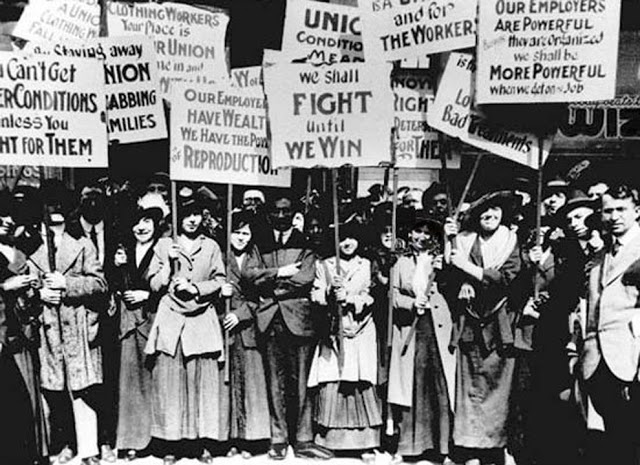
In 1909, women socialists in New York City organized the first Women’s Day after 15,000 women had marched through the city the year before, calling for shorter working hours, higher pay, and the right to vote. In 1910, 100 women from 17 different countries gathered at the International Socialist Women’s Conference and voted to establish an annual Women’s Day on March 8th. Protests organized at the time demanded the right to vote and to hold public office along with protections against discrimination in the workplace. Russian women who were striking and calling for peace and bread on March 8, 1917 sparked the February Revolution that overthrew the Tsar and paved the path to the socialist revolution later that year.
In the newly formed Soviet Union, under the leadership of the Bolsheviks, women had the right to vote, to “no-grounds” divorce, to homosexual relationships, to abortions (in 1920, the first of any country), and to an education. It also banned marital rape. Free communal canteens, laundries, and childcare services enabled women to participate more in the workplace and in politics. By the 1980s, 90% of Soviet women were part of the country’s workforce. Health care was provided for all free of charge. Women could receive stipends to care for children at two-thirds of their pay during maternity leave, and they could retire with a pension at age 55. All workers had a right to a week of paid vacation and at least 12 paid holidays.
But with the fall of the Soviet Union and the restoration of capitalism, 70-80% of women became unemployed by 1991. The wage gap between men and women today in Russia is 49.1% (as of 2023).
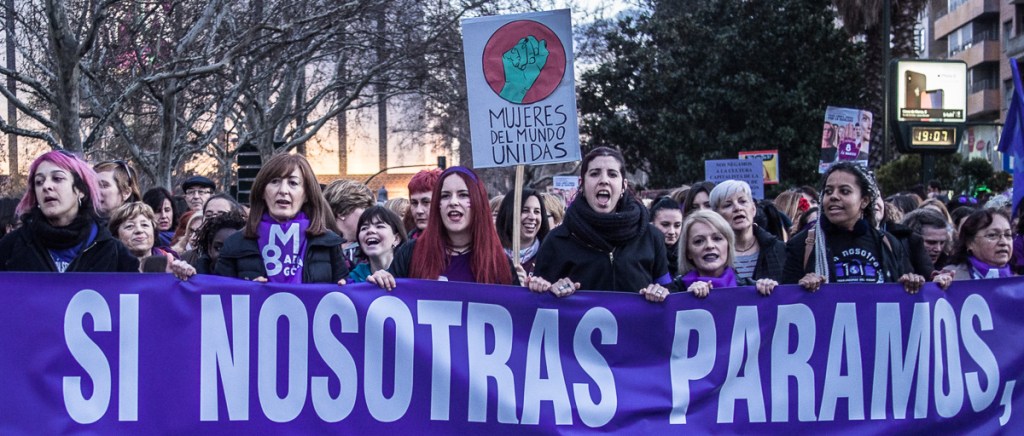
Socialists across the world commemorate International Women’s Day by organizing protests and strikes in support of women’s rights and workers’ rights. In 2021, women in Poland called for abortion rights following restrictions by the Constitutional Tribunal the previous October. Tens of thousands of women had struck and staged sit-ins immediately following this ruling. In 2019, protestors in South Korea took to the streets to call for equal pay for women, the same demand around which Spanish working women went on a 24-hour strike in 2018. In the Philippines in 2018, hundreds of women gathered to protest the Duterte regime’s murder of many working women in the government crackdown on illegal drugs.
As socialists, we emphasize the need for international solidarity in the fight for women’s equality. Capitalism searches for the cheapest labor possible, often using the labor of women – especially immigrant women and women from poorer parts of the world. In order to protect their high profits, capitalists try to prevent working people from uniting against them. They whip up sexist, racist, anti-immigrant, and nationalist/xenophobic sentiments in hopes of dividing workers. The only solution for the working class is a united working-class stance against the race to the bottom in our working and living standards.
The Union Fight for Women’s Equality
Unions have played an important role for working women. Women are among the most active and militant in the labor movement today, especially those in education, healthcare, child care, and home care services. Women in unions earn 22% more than women not in unions. They are 15% more likely to have access to paid vacation time and 20% more likely to get paid sick time.
Starting in the mid-1800s, socialists, communists, and anarchists – many of them immigrants from Europe – organized some of the country’s first unions and some of the earliest strikes of working women, especially those in the textile and garment industries. These included figures like Elizabeth Gurley Flynn, Agnes Nestor, Kate Mullany, Lucy Parsons, Emma Goldman, and Vicky Starr. In 1909, a three-week strike in NYC of 20,000 predominantly women and immigrant garment workers won improved wages, working conditions, and hours, building the largest local of the International Ladies’ Garment Workers’ Union. The 1912 Bread and Roses strike in Lawrence, MA of 10,000-15,000 textile mill workers against pay cuts won wage increases for 275,000 textile workers in New England, and a 15% wage increase and more overtime pay for those in Lawrence.
Women workers were initially overlooked by the vast majority of the labor movement and left out of union membership, despite working alongside their male counterparts, including in the auto and electric manufacturing industries. But this began changing in the 1930s after women were heavily involved in sit-down strikes, even at times getting arrested in larger numbers than the men. Unions organized cigar and shoe makers, retail workers, teachers, nurses, home and child care workers, and hotel workers, most or many of whom were women.
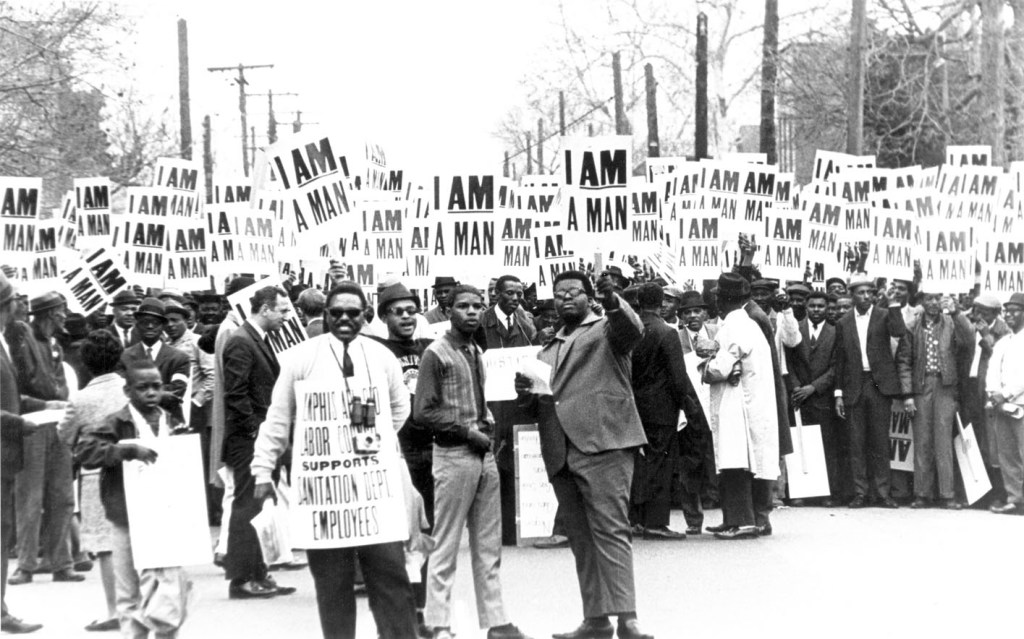
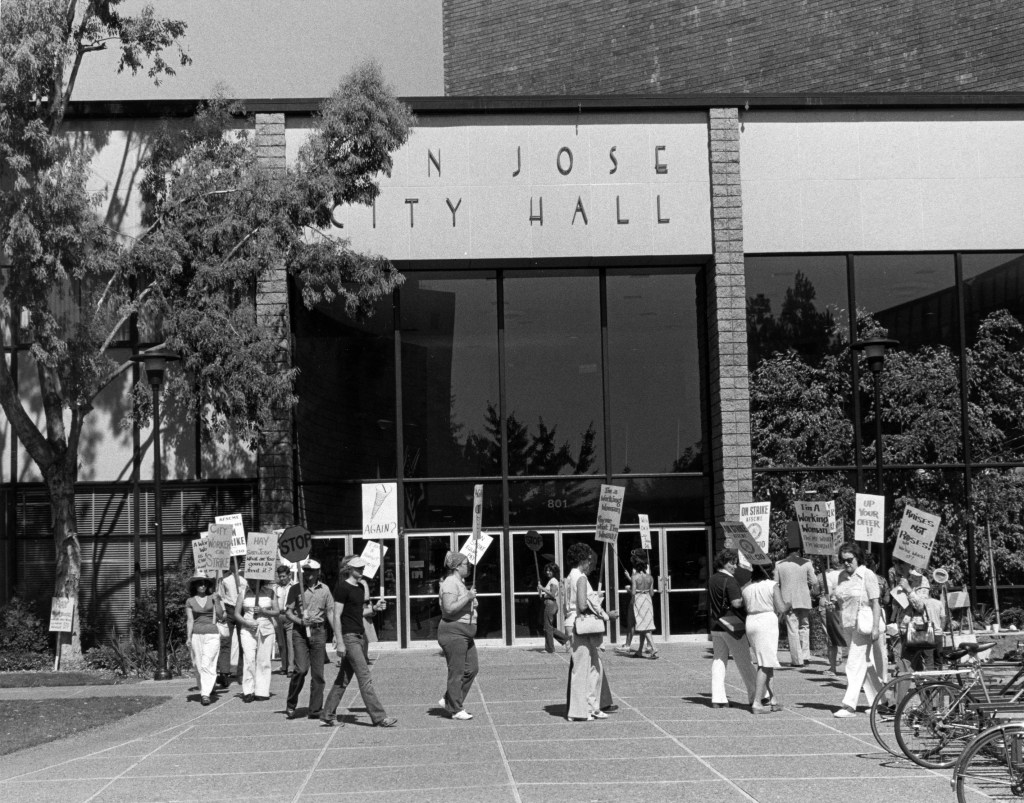
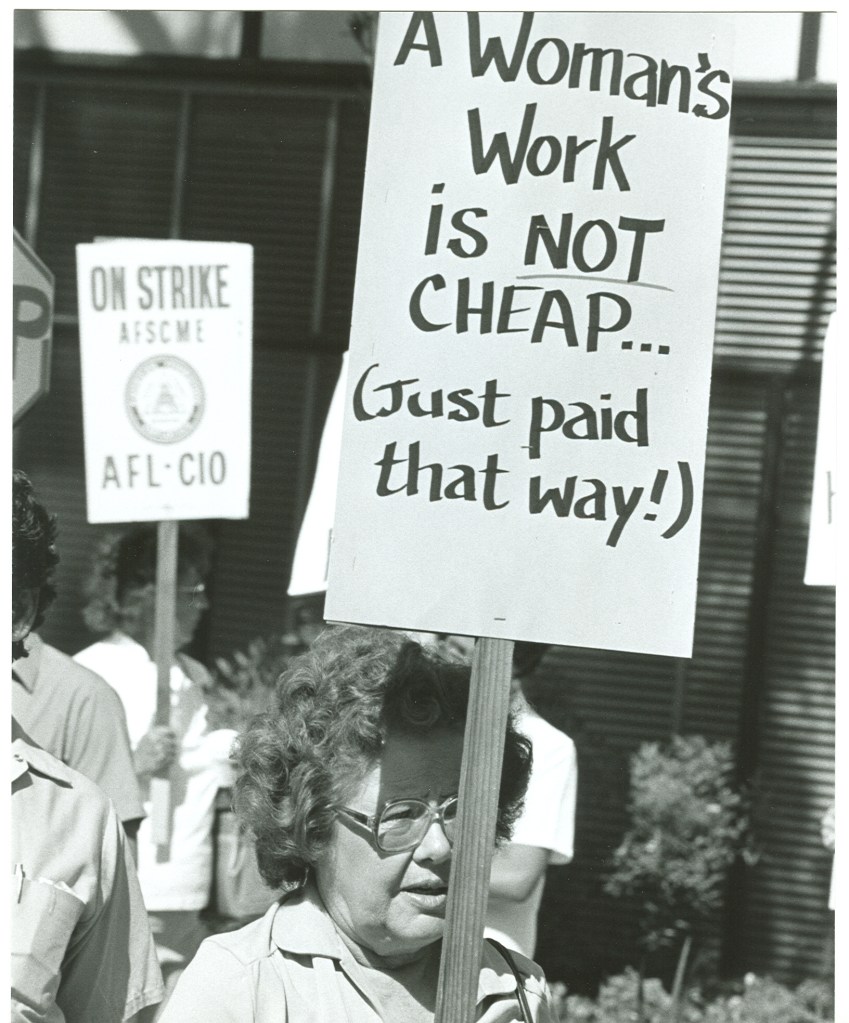
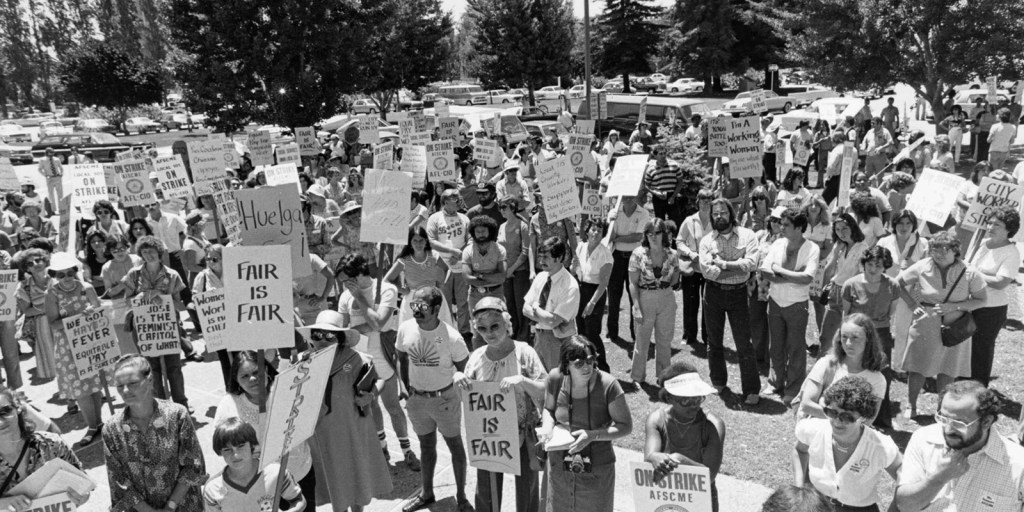
In the 1960s and 1970s, many public-sector unions like AFSCME and teachers’ unions made their biggest gains through members striking to win union recognition and improved wages. In 1960, the United Federation of Teachers (UFT) in NYC walked out on their jobs, setting off a decade of 300+ teachers’ strikes that brought membership in the UFT’s parent union, the American Federation of Teachers, from 60,000 to over 200,000 by 1970. Public employee union membership rose from 400,000 in 1955 to over 4 million by the 1970s. Between 1960 and 1966, the percentage of public workers in unions increased from 5% to 25%. Public workers went from participating in 15 strikes in 1958 to an average of 375 strikes per year in the 1970s. This momentum was stopped by Reagan’s firing of 11,000 PATCO union air traffic controllers in 1981.
The labor movement today needs to resurrect its militant legacy, especially if it hopes to improve conditions for working-class women. We need to bring the fight against women’s oppression into our workplaces. While the number of women in unions increased by 150,000 in 2024, union density remained at the same 9.5% it was in 2023. In 1983, union density for women was 14.6%. With around half of the workforce wanting to join a union, the labor movement should seize upon this moment when it has widespread support – 70% among the public – to wage mass unionization campaigns and strikes to improve wages and benefits. This will benefit all working people, but particularly women and women of color. The 2018 wildcat strike of West Virginian teachers not only won 5% wage increases for strikers but also for all public-sector workers in the state. Strategies like these that bring together working women with the larger working class for more powerful and militant strikes will have the power to make stronger demands that benefit more workers.

Still, attacks on unions from the two corporate parties, Republican and Democratic, mean right-to-work laws in 26 states, and education and healthcare workers – many of whom are women – are facing understaffing, cuts, and high turnover. In Massachusetts, the Democratic Party has banned public-sector strikes and exempted municipal workers from minimum wage and Paid Family Medical Leave laws. Union teachers from three towns in MA went on strike this past fall against wages as low as $11/hr and very little paid parental leave. 80% of paraprofessionals in MA make less than $30,000/year. If unions stop endorsing and putting money toward the two corporate parties and instead help lay the foundation for a workers’ party, not only can the labor movement better draw on the strength of its collective power, but it can also help organize and unite with the larger working class to fight for improved wages and social benefits for all.
What’s Women’s Rights Got To Do with Private Property?
Capitalism offers no way forward for women’s rights. It happily accommodates black capitalism, woman capitalism, trans capitalism, etc., because none of these threatens the capitalist system that exploits working black, women, and trans workers for profit. Claims that the Kamala Harrises, Hilary Clintons, Angela Merkels, Mary Barrases and Carol Tomés (CEOs of General Motors and UPS respectively) of the world will improve working women’s lives ring hollow as the corporations, and the governments that they occupy the highest levels of, attack workers on all sides.
Real meaningful change will require socialist tactics and ideas that bring working women of all backgrounds together with the wider working class, including working men and queer workers. It’ll require workers striking for demands like a $30/hr minimum wage, the right to quality affordable public housing for all, the cancellation of student loans, and universal healthcare – all of which will improve the lives of workers, but especially women workers. But even if we achieve all this, it won’t be enough.
Sexism is baked into capitalism. A system that rests on private control of the means of production, on private wealth and ownership of business that’s passed down through the nuclear family, means that working women are oppressed not only at the workplace, but at home. Child care and elder care are privatized to the economic unit that is the nuclear family in class society, with women expected to take on those tasks. At the same time, capitalism seeks to exploit women as cheaper providers of labor than men, and women often find themselves juggling work and family demands. Women also may lack the income to live independently and so can be trapped in abusive partnerships for financial reasons. By taking major industries under public ownership and planning production democratically, we could fully fund housing, healthcare, and education for everyone, creating the resources to socialize “domestic labor” and begin to achieve full gender equality.
 Independent Socialist Group