
by Nick Wurst
SMART-TD Local 1473 & Railroad Workers United (personal capacity)
Worcester, MA
Unions are more popular than the two corporate parties. The labor movement has consistently received significantly more support from the American public than either the Republican and Democratic parties in recent years. For the 8th year in a row, support for unions was above 60% while support for the two corporate parties reached no more than 51%. It reflects how the largely unorganized working class sees unions as a way to fight back against ever-expanding wealth disparity and an ongoing decline of living standards.
So far, unions have been unable to transform that support into increased union membership. Union density had decreased to a record low of 10% by the end of 2023. Frequently anti-union labor law is cited as one of the biggest obstacles for the labor movement, both making it more difficult to organize new workplaces and to defend against attacks on already-unionized workforces. Generally speaking, the political strategy of the labor movement to win more favorable labor laws has been to contribute money, organizing staff, and other resources to the election campaigns of the Republicans and Democrats. In four of the last five election cycles, unions spent more than $200 million on the elections. In all five, more than 85% of that money went to the Democratic Party.
These hundreds of millions of dollars have not increased union density or improved living standards for most workers. The two most recent Democratic administrations never passed their flagship pro-labor legislation promised in exchange for union support (The Employee Free Choice Act [EFCA] under Obama, and the Protect the Right to Organize [PRO] Act under Biden) despite multiple years of controlling the Presidency and both houses of Congress at the same time.
Time for a New Strategy:
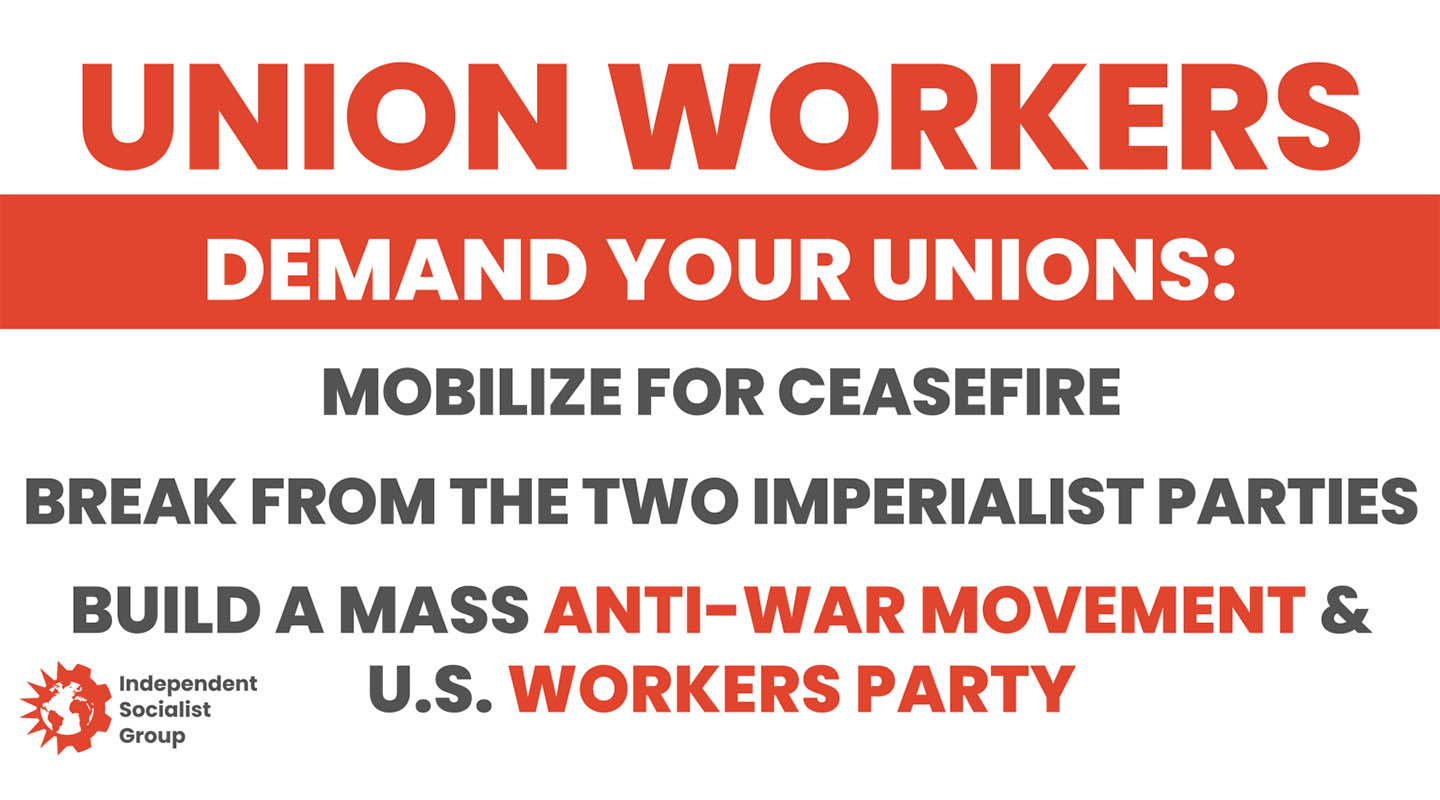
Unions Should Help Start a Workers’ Party
Gallup has also shown around 60% of all Americans, and usually more than 70% of independents, are in favor of a third major political party. If the 70% support for the labor movement had translated into vote shares for a hypothetical candidate in the 2024 presidential election, it would have equaled 107 million votes, over 30 million more votes than either the Democrats or Republicans received. In four of the key US Senate races, it would translate as follows:
| 70% labor | Republicans | Democrats | |
| Montana | 425k | 319k | 276k |
| W. Virginia | 523k | 514k | 207k |
| Ohio | 3.99m | 2.85m | 2.65m |
| Pennsylvania | 4.88m | 3.39m | 3.38m |
The Census Bureau estimates that there are more than 100 million adults in the United States who did not vote. A significant number of non-voters could be attracted to voting for the program of an explicitly pro-union, working-class political party.
The viability of such a party was demonstrated by the Dan Osborn campaign for US Senate in Nebraska. Osborn, a former union strike leader, campaigned as a pro-working-class, pro-union candidate, independent of both the Democrats and the Republicans. He called for an increase to the minimum wage, the adoption of the PRO Act, and the end of corporate money in elections, insider trading by politicians, and handouts for big pharma. He secured the endorsement of many unions and the state AFL-CIO and raised nearly $8 million without accepting any corporate donations. While he ultimately lost, he still got 47.7% of the vote. He had pulled even with the Republican incumbent in the polls towards the end of the campaign before a big-money ad offensive against him.
Osborn outperformed every Democrat candidate for either of Nebraska’s US Senate seats since 2006 and got a higher percentage of votes than Harris (46.7% to 39.1%). While there are valid criticisms that can be made of Osborn’s campaign, especially around his position on immigration, his main ideas and results in the election demonstrated that working-class demands resonate even in states written off as “conservative” by liberals. Osborn was a first-time candidate, campaigning without the benefit of any sort of party infrastructure, and also outperformed any other independent or third-party candidate anywhere in the 2024 elections.
Prepare for 2026 and 2028!
Imagine if the political resources of the labor movement were put towards establishing a new working-class political party instead of throwing good money after bad to the Democratic Party. Those resources could be used to identify, right now, some key races in 2026 and 2028 and recruit rank-and-file union members and activists to run as independent or workers’ party candidates. $200 million of political spending would fund two dozen Dan Osborn campaigns. That’s not even considering fundraising from outside of the unions, or the additional funds that could be raised when union members and other workers see their organizations trying something new instead of the same old failed strategy of supporting either of the two corporate parties.
Many unions have political departments with key resources. These include access to voter registration databases, canvassing software, lawyers, full-time political officers and researchers. Unions also have already-established canvassing and “Get Out The Vote” efforts staffed by union member volunteers. All these resources mean that a new party backed by a major union would immediately be seen as a much more serious force than even long-established third parties. It could have a comparatively easier time establishing ballot access, meeting registration requirements, and obtaining benefits like matching public funding.
A new workers’ party could quickly win major breakthroughs in city, county, and state elections, winning seats and even majorities.
Unions should immediately prepare to run independent candidates in 2026 and 2028 by organizing meetings and discussions at the local, state, regional, and national level to:
- Identify key races to contest, taking into consideration:
- Locations with a large concentration of union membership, good connections with other unions and community organizations, previous campaigning experience, and resources like staffers, offices, etc.
- Positions which have potential to help organize for and make policy on labor law, taxation, wages, housing, public services, healthcare, and other issues that working people are immediately concerned about.
- Where members think there is a good chance of reaching local voters with public events and door-to-door outreach
- Develop rank-and-file union members or working-class activists who are well regarded by the union membership and willing to run as candidates
- Lay the foundation for establishing a new nationwide workers’ party.
Currently, unions are failing to fight back against declining union density. Unions can take a new approach to politics through building a workers’ party, to not only defend against attacks but also go on the offensive and win important gains for unions and the entire working class.
A Party Of, For, and By Workers
A party representing the working class and backed by unions will need to operate differently. Mobilizing party members in support of party candidates, strikes, mass protests, and union organizing would set the new workers’ party apart from the two corporate parties. Neither the Democrats or Republicans organize mass protests or strikes for fear of losing control or damaging the so-called legitimacy of the corporate political system.
What gives unions their power to negotiate contracts or defend their members is the threat of workers’ action which would affect the profits of the capitalists. A workers’ party could use that same power to back up its program and demands, defeat anti-worker legislation, and overcome political obstacles set up by billionaires and corporations.
In order to defend itself against corporate influence, a workers’ party would need to keep totally clear of the Democratic and Republican parties and have a fundamentally different internal structure from the corporate parties. This kind of political independence would help recruit members disgusted by both parties while also protecting party democracy and enforcing accountability of party candidates, officers, and staff.
- No corporate funding! Accepting no money from corporate sources. The party should be funded by its members and donations from unions, working-class individuals, and pro-union, working-class organizations.
- Member-driven democracy! Members have the right to discuss, debate, and decide what the party stands for, how it operates, and who should represent it (internal and public offices alike). Local membership meetings could be organized regularly to discuss and vote on initiatives and party priorities and to elect delegates to regional, state, and national meetings. Leadership bodies at all levels—which are elected to run the party between conventions and other general membership meetings—should be directly elected. Leadership decisions should be reviewed and, if necessary, amended or overturned by the membership.
- Working people as candidates! Candidates should be members of the local working class, including rank-and-file members of unions, in order to be able to best connect with and organize working-class voters.
- Right to recall! Members should have the right to recall any elected officer or party candidate to hold them accountable, including replacing anyone elected who abandons the party platform.
- A hub for the labor movement! Affiliated unions and other groups should be given seats on all relevant party bodies, to be filled by delegates elected by the membership of the affiliated organization. Local party branches could be a resource for workers who are interested in connecting with a union in order to organize their workplace, and branches can mobilize party membership to support any local union effort or action. The party could establish geographical and industrial committees where unions would be encouraged to pool resources, share information, and unite on contract campaigns and organizing.
- Workers wage for party staff and candidates! Any party staff, full-time officers, or candidates of the party should only take pay and benefits equal to the average of the workers in the areas they represent.
A Clear Program To Unite the Working Class
In the 2024 elections, working people in “red” states voted to increase minimum wages, legally require sick time, and expand abortion rights.
A clear pro-worker platform could appeal to voters who currently consider themselves Democrats, Republicans, or independents, as well as non-voters. It could build a multi-racial party and movement around shared needs, class issues, and struggles against racism.
Corporations and their political parties want workers to see one another as “competitors,” for jobs or for rights, and to keep workers from uniting. Attacks on immigrants and using racism to divide working people distracts from fighting the real enemy, capitalism, and allows corporations to drive down wages and increase profits. By addressing the class basis of oppression, a workers’ party could help unite workers against racism, sexism, and transphobia.
Here are some demands which could help form the program of independent union or working-class candidates or the program of a union-backed workers’ party:
- Fight the cost-of-living crisis! Raise the minimum wage to $30 an hour with cost of living adjustments. Establish price controls for essential goods and services, including utilities, groceries, medicine, and housing. Cut taxes on the working class. Create affordable, high-quality public housing, universal healthcare, free childcare, and mass transportation, and more through massively increased taxes on corporations and the rich.
- Share out the work! Establish a minimum number of hours to fight the under-scheduling of part-time workers and precarious gig work. Reduce the work week to 32 hours with no loss in weekly pay. Make all overtime voluntary. Establish minimum safe staffing requirements in key industries like transportation, schools, healthcare facilities, food service, retail, utilities, etc. Initiate jobs programs that use public funds to create public-sector union jobs with good wages and benefits. Fully fund all public-sector services and reverse privatization and subcontracting. Put failing companies under public ownership to keep workers employed and to produce for human needs, not profit.
- Overhaul labor law! Repeal anti-union laws like Taft-Hartley. Lift the bans on solidarity strikes and ensure that all workers, including public-sector workers, have the right to unionize and strike. Require companies to make their finances public if they claim they can’t hire, increase wages, improve benefits, or that they need to do layoffs.
- Strengthen democracy! Cut politician pay and benefits to match the average pay of the working class. Democratize all levels of government by replacing appointed positions with directly elected positions. End voter suppression, gerrymandering, and the electoral college. Criminalize politicians who enrich themselves using their offices. Fight for democratic workers’ control of key industries to take the economy out of the hands of the millionaires and billionaires.
Ultimately, a workers’ party will need a socialist outlook and program. Capitalism functions by exploiting the working class, using workers’ labor to produce and distribute goods and services, while giving workers the minimum amount of compensation in wages. Then the capitalist class tries to sell goods and services back to workers at the highest price possible. The role of workers in the production and distribution of goods and services gives the working class its potential power if organized. In a globalized capitalist economy, it’s crucial to build links with workers of other countries to take solidarity action, including strike action across borders, in a united front against multinational corporations.
Any workers’ party that wants to fight back against exploitation will need a clear understanding of how capitalism functions and how to use workers power to achieve its aims, which socialism offers. But in order to end the exploitation of our labor by the millionaires and billionaires, it will require replacing the capitalist system with a socialist alternative, where the economy and society as a whole is under the democratic control of the working class, where we can democratically decide how to use our labor to meet society’s needs instead of generating profits for corporations and their owners.
Most working people, and even most of the labor movement, don’t see themselves as socialist, and a workers’ party may not initially have a socialist outlook, program, or strategy. But we need to organize for these in order to build a strong workers’ party that can fight for the working class.
 Independent Socialist Group