
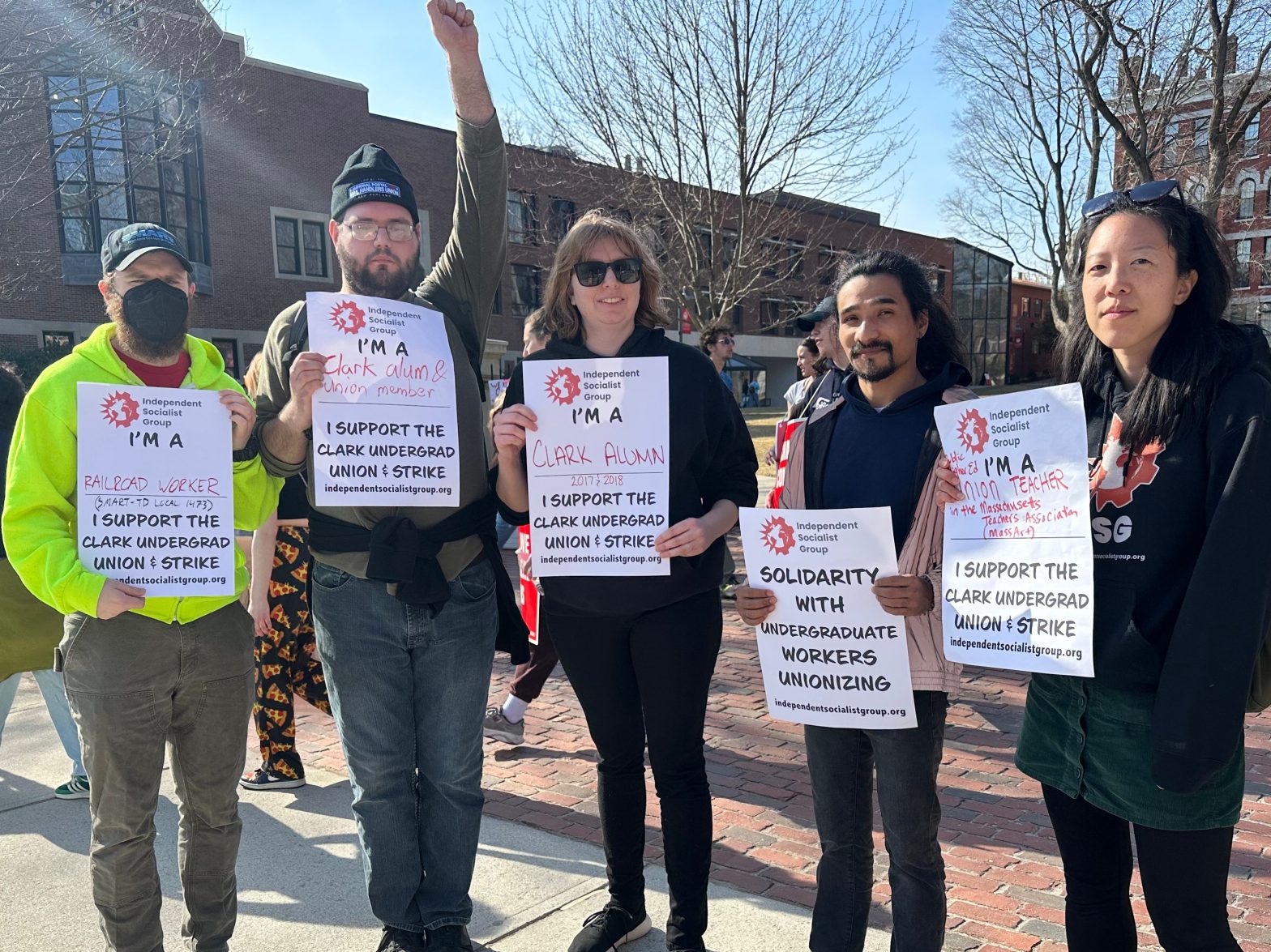
by Lilly R. (Clark Class of 2026 & student worker) & Nick Wurst (SMART-TD Local 1473)
(personal capacities)
Worcester, MA
On March 13, hundreds of undergraduate workers at Clark University in Worcester, MA took strike action in a fight for union rights for the 600+ undergrad campus workers. Independent Socialist Group (ISG) members participated in the strike, both as strikers and as supporters. While ultimately the strikers returned to work after 11 days without winning union recognition, the Clark University Undergraduate Workers Union (CUUGWU) has pledged to continue organizing.
In 2022, Clark graduate workers organized with Teamsters Local 170, winning a union election and striking for five days to secure a first contract. In January 2025, the Clark undergrad effort to also join Local 170 was announced. While unions have had success organizing workers on college campuses, like faculty, dining hall workers, facilities, clerical workers, and graduate workers, organizing undergraduate workers has been much more difficult.
Interest in unionizing on college campuses has been increasing, and for good reason. Higher education is becoming more and more expensive every year. Students not only grapple with the cost of living crisis, but also skyrocketing tuition and ballooning student debt. Often forced into precarious work while in school, students also struggle to find jobs in their fields after graduation, entering the workforce without the better wages and benefits that they were promised when they committed to college.
With unions receiving 70% public support and student activists looking to defend themselves against attacks from the government and school administrations – particularly over Palestine solidarity efforts – it’s no wonder that many students are turning to the labor movement as a way to fight for their futures.
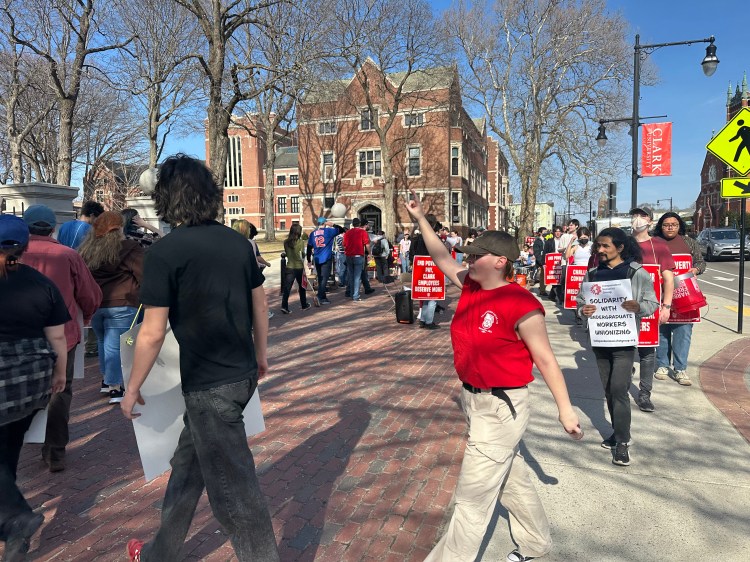
At Clark, undergraduate students compete for too few jobs, which offer low wages and don’t offer guaranteed hours, with some positions providing very few hours. They work in admissions, fundraising, groundskeeping, IT, the library, art programs, information desks, as Resident Assistants (RAs), and as Peer Learning Assistants (like TAs), among other positions. After undergrad workers filed for an National Labor Relations Board (NLRB) election, the Clark Administration released a statement which made it clear that they would not recognize the union, didn’t think the workers were “real workers,” and would challenge the process every step of the way. Clark even threatened, which they never did during the graduate unionization effort, to try and overturn the 2016 Columbia ruling, which is seen as a major landmark in giving legal protection to student worker organizing campaigns. This was seen as the university taking advantage of the Trump administration’s anti-union agenda, and the Teamsters withdrew its petition for an NLRB election, stating they did not want to open the door for union rights for student workers around the country to be attacked in the courts.
Instead, the union called a strike vote and struck Clark, demanding card-check neutrality. This was an important move to make, showing that the union effort wouldn’t be intimidated. Jumping through the hoops of the NLRB process is not the only path for organizing, and the Teamsters have struck for union recognition before. Undergraduate workers and supporters set up picket lines, initially for 24 hours a day. The strike peaked 2 days in when workers and supporters packed the pickets during the university’s “Destination Clark” event, a day where accepted students and their parents tour Clark. Normally, these prospective students and families are shown around by undergrad workers, who play a critical role in introducing potential students to the programs at Clark, encouraging them to commit to the university. The Teamsters hoped that striking that day and putting on public pressure would force Clark to recognize the union.
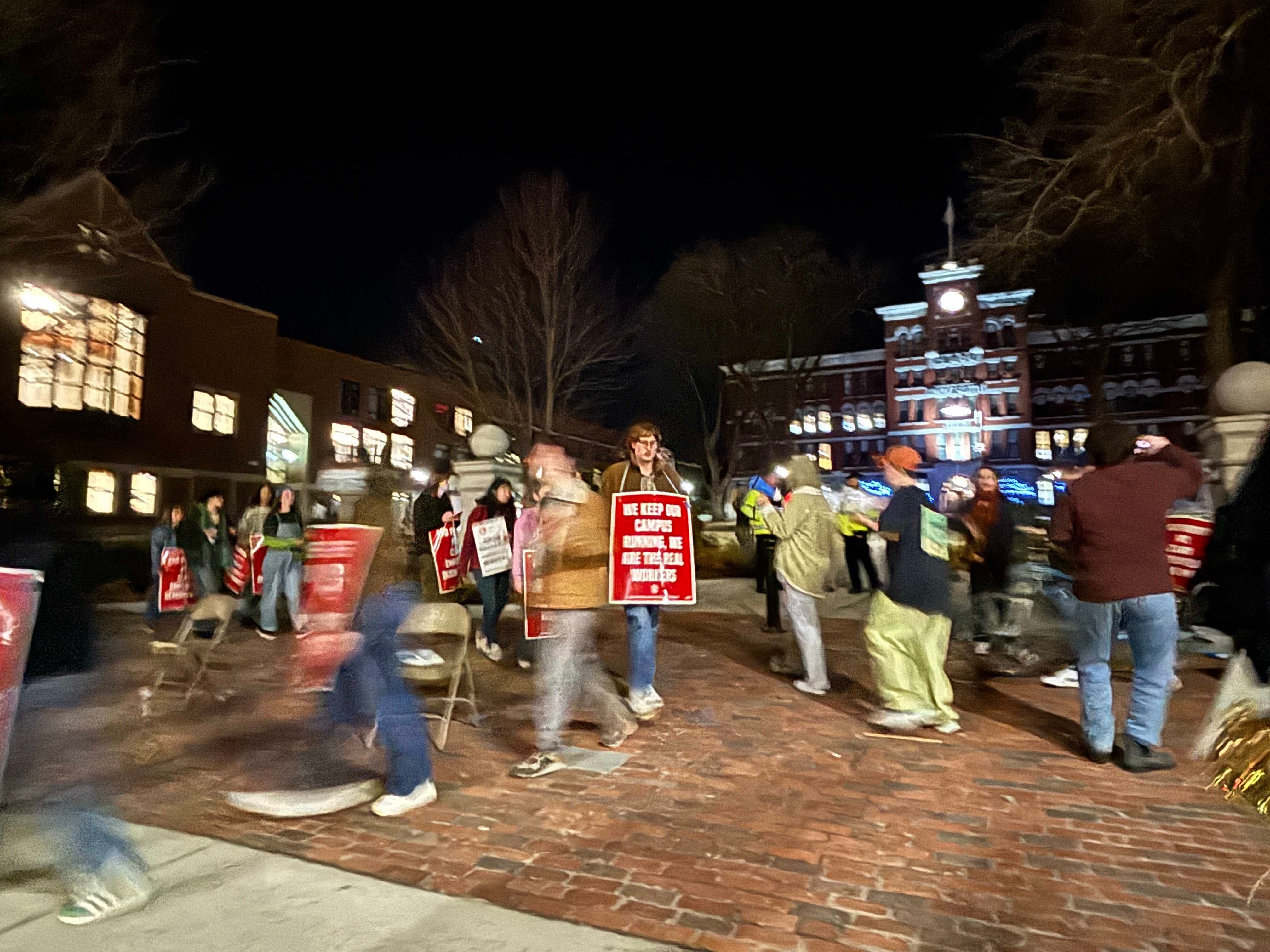
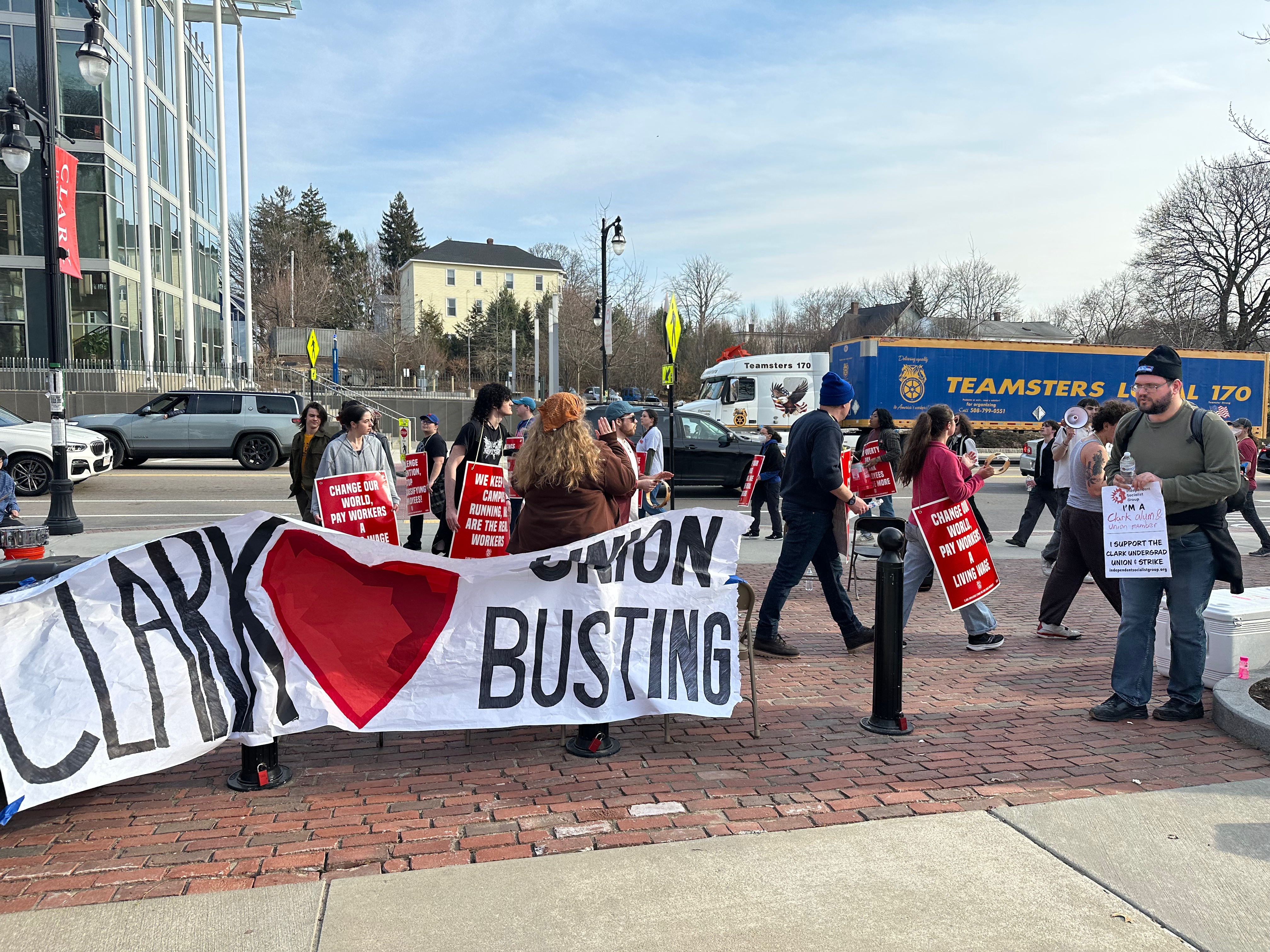
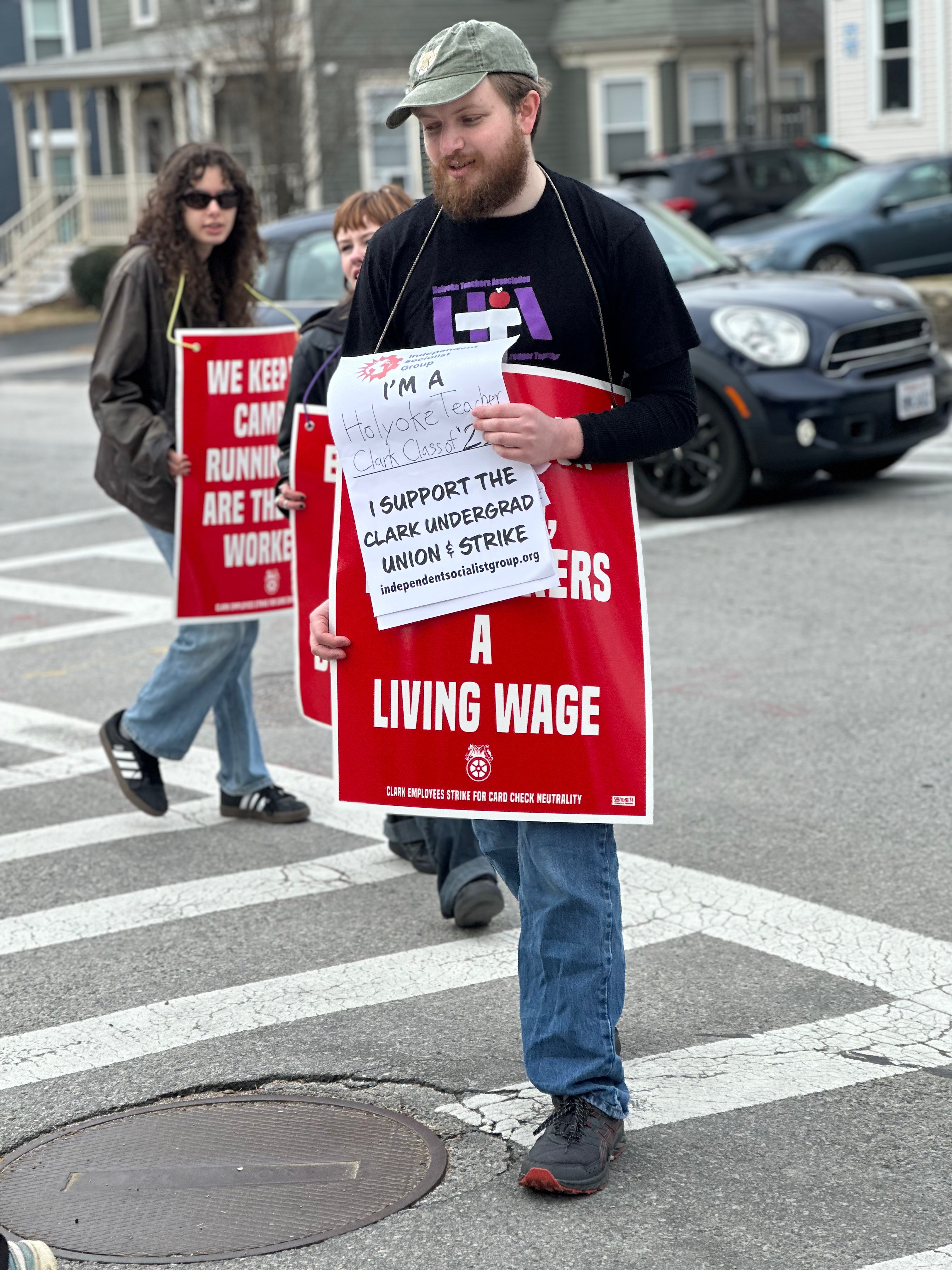
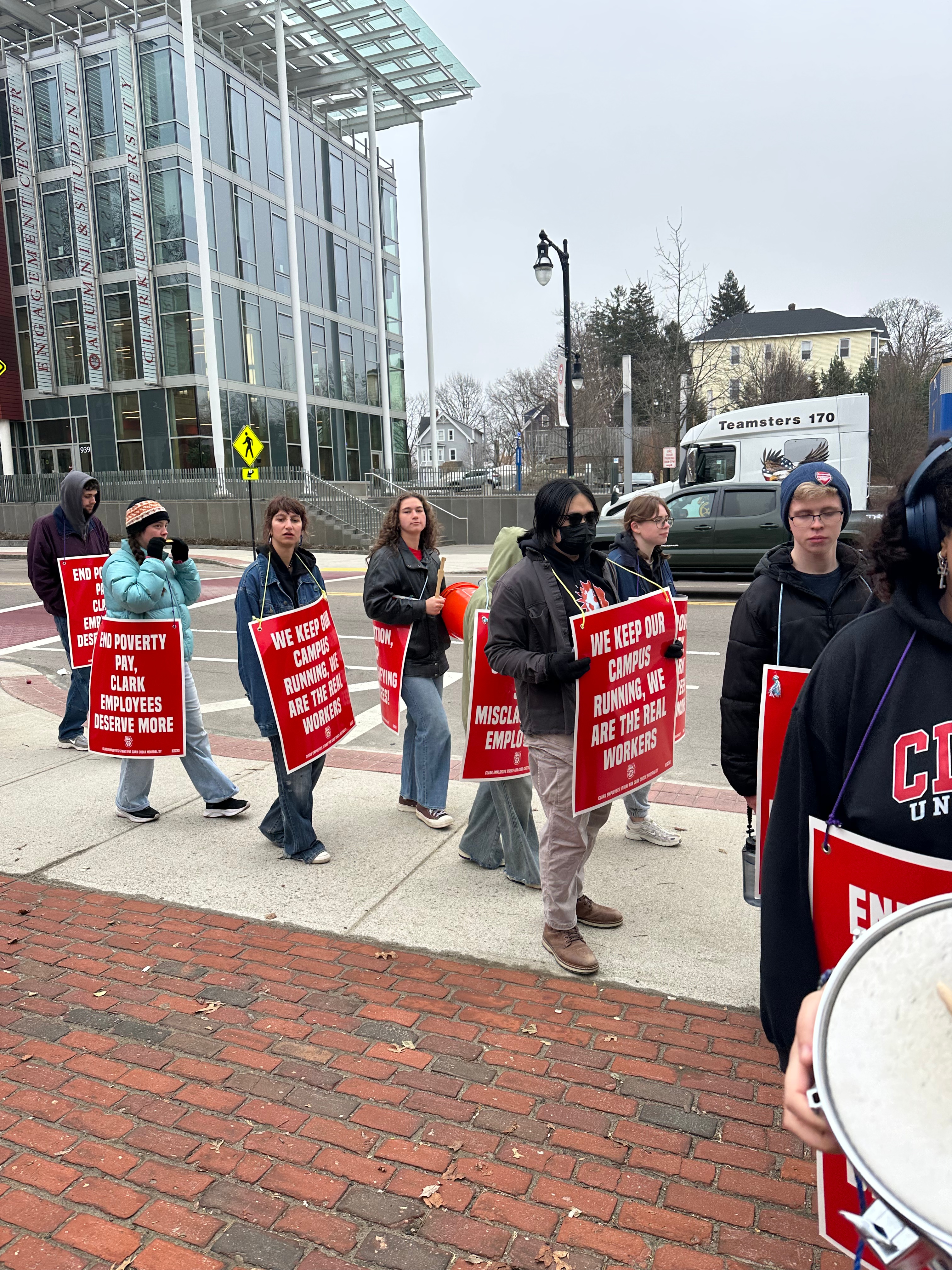
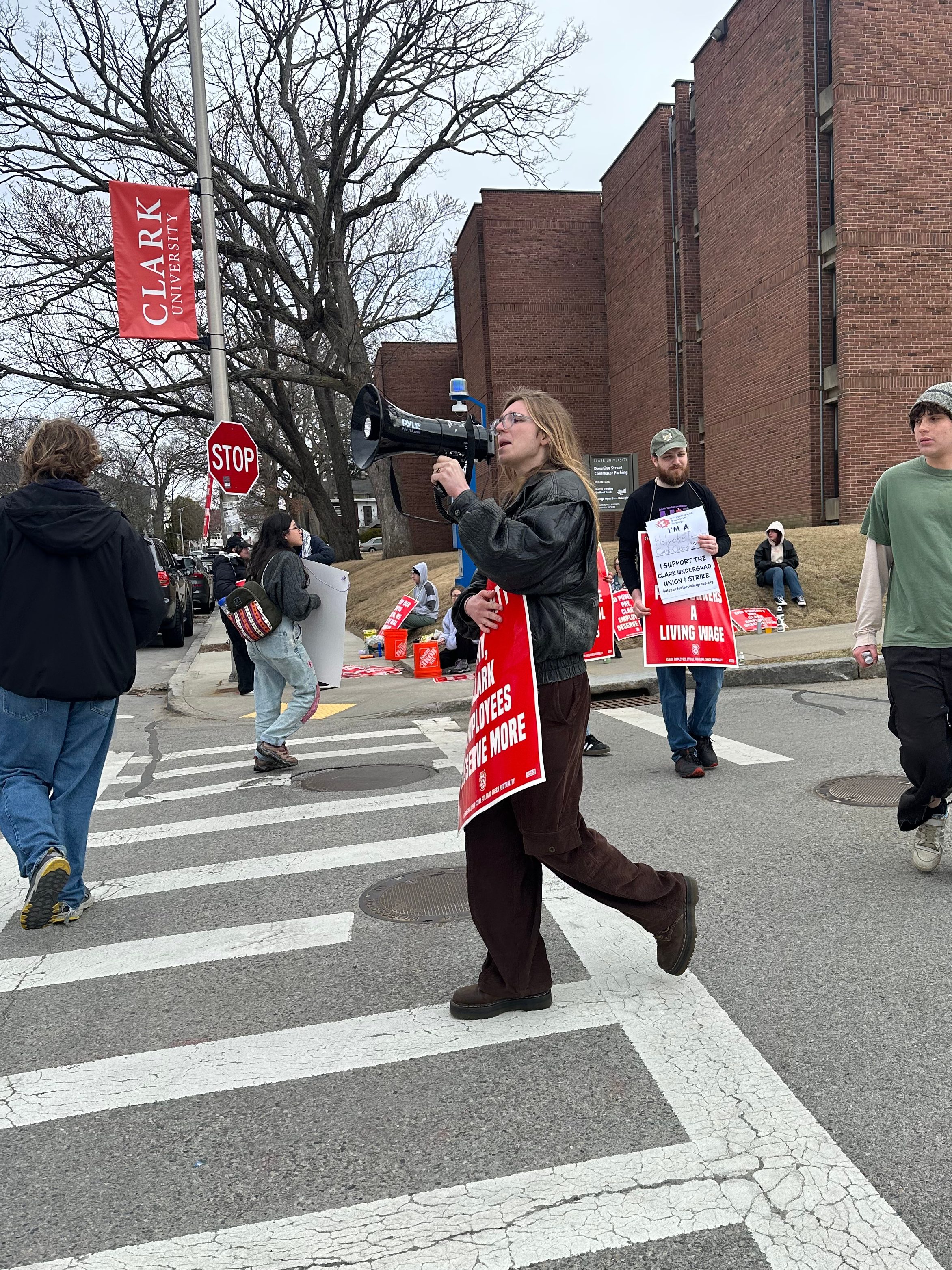
However, “Destination Clark” came and went, Clark continued to ignore the union, and the strike seemed to flag. Anecdotally, from conversations that ISG members and supporters had on the picket lines, morale on the picket line seemed to deteriorate, and questions about the future of the strike were being raised. It seemed that some of the organizers had expected Clark to settle after a big disruption of “Destination Clark.” With picket lines thinning, workers moved to end overnight pickets, and eventually the strike ended. The return to work process was messy, with conflicting rumors in the final days about whether the strike would end, when it would end, stories of big chunks of strike captains returning to work on their own, and confusion about where the discussions about the strike were taking place and who was participating in decision-making.
Some important tactical and strategic questions were raised by the strike. It’s important to state up front that this is very much new territory. Undergraduate organizing efforts are not very common and face unique challenges.
First, there is the question of the organizing in the build-up to a strike. Again, anecdotally, there seemed to be a lack of communication around who was leading the organizing effort, how workers could get involved, and how decisions were being made. Staff organizers with the Teamsters seemed to be central figures, and while Local 170 successfully organized graduate student workers and has experience with Clark administration, it’s worth pointing out that the Teamsters don’t have much experience organizing higher education workers, especially undergraduates. Then again, no unions have much experience organizing undergraduates.
News about a strike vote being called had circulated among students about two weeks before the actual vote date, though whether it would actually happen seemed uncertain. It raised immediate questions about whether there was enough time to build support for a strong strike vote as well as the foundations for following through if workers did vote to go on strike. The timing felt especially problematic given that the union planned to hold the strike authorization vote two days after students returned from their week-long spring break, which meant the union had little time to contact students to motivate striking. And while the union clearly had plans to target “Destination Clark” to try to force Clark’s hand, it was unclear whether the walkout would be a one-day strike or an indefinite one. Either way, there seemed to be no buildup of escalating actions to try and put more pressure on the university and to help prepare and unite workers for taking strike action. The Teamsters have successfully used tactics like rallies and practice pickets in contract campaigns in the past, including at UPS. It was unclear if they’d had any plans for escalation after “Destination Clark.”
For the actual strike, it was unclear what sort of pressure an undergrad strike would have. Obviously, workers wanted to disrupt business as usual, but most of the critical functions of the university are done by various full-time staff and faculty. During the strike, it was reported that the IT department was shut down, and the library operated with reduced hours. However, most classes and events still ran, and strikers continued to use campus facilities. Student workers only struck in their capacity as workers, not as students, and normal operations of the university mostly continued as usual.
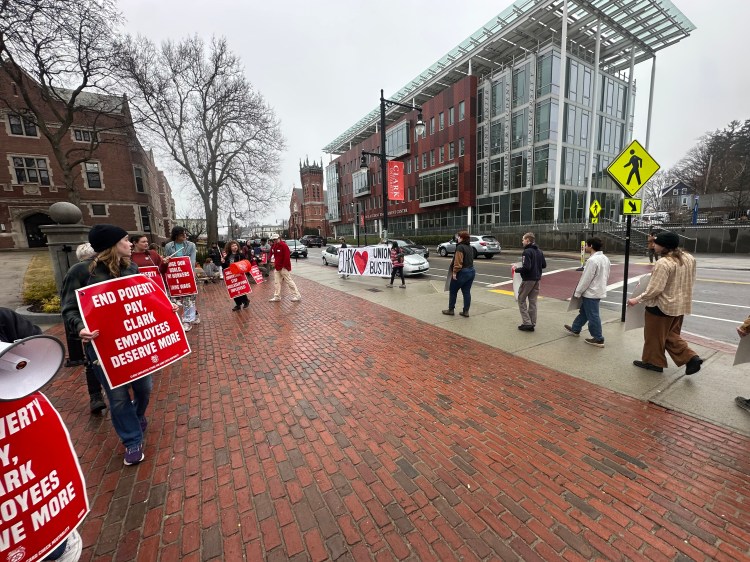
Targeting “Destination Clark” was a really good idea. It could have been executed better, with a better leaflet that could have been handed to visitors explaining the strike. Perhaps an event could have been organized off campus where the union could have invited prospective students and their families to discuss the strike and learn about the realities of working on campus. Unfortunately, while many prospective students and parents may have been generally supportive, Clark was probably betting that very few would actually withdraw from the university as a result of the strike, and so while it was a PR hit, it probably didn’t represent a serious economic threat.
The ace in the hole, at least from the outside, seemed to be the graduate student workers. Graduate workers play a key role in helping to run classes and producing the research that the university uses to draw in investments. Many assumed that the grad workers, also organized as part of Local 170, would respect a Local 170 picket line. However, the grad workers continuing to cross the picket line during the strike – under pressure from union leadership to respect their own contract’s “no-strike” clause – severely undermined the position of the undergrads.
There were other signs of weakness in terms of student support. For one, the strike vote results were never publicized. In most situations where workers overwhelmingly vote for a strike, unions will share the result as a final warning shot to the company, demonstrating the resolve of the workforce to take the struggle to the end. We have heard that the vote was 78% in favor, with around 50% turnout. The rumor was that the goal was an 80% strike vote. During the strike, the union faced claims of harassment of workers who did not join the strike. Arguments seemed to revolve around the idea of some workers not being able to afford to strike, or feeling as if their identities made them unable to join the strike. These are arguments that should have been addressed with patient discussion, one-on-one and in membership meetings, to assure that the strike had the best chance of succeeding. Ultimately, no individual worker can afford to strike, and any strikers potentially face retaliation. The point is not for a strike to be sustainable for the long term, but instead to win quickly before retaliation and a lack of a paycheck take their toll. It’s worth mentioning here that many students seemed to be taken by surprise by the requirement to put in a certain number of hours on the picket line to qualify for strike pay. While it seemed to be a fairly standard arrangement based on our experience with other strikes, the fact that it wasn’t communicated clearly to the strikers is concerning.
While this initial strike did not win outright, it was a bold move and had potential to be a first-of-its-kind undergraduate union. Clark undergrad workers were able to raise awareness about their issues among the broader community of Worcester as well as among incoming students. Clark University itself organized a number of “listening sessions” in the wake of the strike to attempt to appease students. That demonstrates that the strike had an effect, even if it wasn’t enough to force the school to the table. The union has stated that this isn’t the end, and that they will continue to organize, although it isn’t clear how much of its activist core is still interested in organizing or if any have been demoralized by the defeat. If the Clark undergrad union effort succeeds, it will open the door for many more university workers around the country.
Perhaps most importantly, Clark undergrads should not go it alone when it comes to their efforts to unionize. Local union workers can join Clark undergrads in active solidarity on picket lines and at actions. This could include members of the Education Association of Worcester, Teamster Local 170 (including UPS workers), the National Association of Letter Carriers and other US Postal Service unions, and the Worcester Community Labor Coalition.
For the Clark undergrad union effort, members of ISG want to offer some suggestions for taking the undergrad union effort forward:
- Continue organizing and hold member-wide meetings for all undergrad workers to discuss ideas and tactics for moving the union effort forward.
- Organize public meetings, leafleting efforts, and informational pickets that can educate undergrad workers and others on campus about the union effort to try and gain support. These events and activities can also help to train up the membership of the union for future actions.
- Consider organizing future one-day or other limited, targeted strikes around big events like Destination Clark. These could help build up towards another attempt at an indefinite strike.
- Coordinate with the graduate workers’ union. As grad workers go into contract negotiations, undergrads can not only support the contract fight but use it as an opportunity to reinvigorate their union campaign. Both undergrad and grad workers can unite in joint actions to help build the strength of both union efforts. Graduate workers should pressure their leadership to scrap the no-strike clause in future contracts and find creative ways around it in future battles.
- Consider a student strike, not just a student worker strike. The ISG club on campus cancelled all its events on campus during the strike. No ISG meetings were held in campus buildings. Not crossing the picket line means not crossing the picket line. If things like Gala, theater productions, classes, and the dining hall continue as normal during the strike, the impact on the everyday operations of the employer is limited. Even if the union itself isn’t willing or able to call for students to boycott classes or organize other disruptions, nothing prevents other groups within the student body from organizing solidarity actions that can increase pressure on Clark to recognize the union.
ISG will continue to support efforts by Clark undergrads to unionize, along with any unionization efforts by other Clark campus workers and the upcoming Clark grad workers’ contract fight.
 Independent Socialist Group