
by Brother Francis
Maine
The 2020 wave of Black Lives Matter (BLM) protests, ignited by the murders of George Floyd and Breona Taylor, flooded the streets of cities nationwide. From Boston to Seattle, from Chicago to New Orleans, Americans of all races took to the streets in outrage. Protests were reported in over 2600 locations around the country. The movements against anti-Black violence and police brutality spread internationally, with people in Europe, Africa, and Latin America seizing the moment to criticize the violent policing system that terrorizes working people worldwide.
While the movement made a potent mark on the public consciousness (i.e. “defund the police” entering the public vocabulary), we must take a hard look at what the movement has actually accomplished. In several cities and states, we saw initiatives for so-called “community policing”, temporary and limited cuts to police budgets, and increased usage of body cameras by police officers. More importantly, there were calls for how to tackle systemic racism via economic changes such as increased wages. However, police-sanctioned harassment and murders have risen year after year since 2019, as body cameras can be turned off or their footage made inaccessible. From 1977 to 2021, in 2021 inflation-adjusted dollars, state and local government spending on police increased from $47 billion to $135 billion, an increase of 189 percent.
To this day, Black Americans are 2.5 times more likely to be killed by police than White Americans, according to the Bureau of Justice Statistics. Black men are six times more likely to be imprisoned than White men. Regarding pay disparity, the median Black household wealth is roughly 10 times lower than that of White households, and Black workers earn on average $0.75 for every $1 earned by White workers (U.S. Census Bureau). The poverty rate among Black Americans is about 17.9%, compared to 9.7% for White Americans (U.S. Census Bureau). Health disparities persist, with Black Americans facing higher rates of chronic diseases (e.g., diabetes, hypertension) and worse health outcomes, especially in rural areas. Though BLM raised awareness about police brutality, the fight for racial justice persists all the same. The root cause of inequality, capitalism, manifests itself via symptoms such as systemic racism, mass incarceration, and economic inequality.
The current cost-of-living crisis (rising housing costs, food insecurity, healthcare expenses, etc.) exacerbates the racial wealth gap. Black families often face discrimination in the housing market, being shown fewer homes or charged higher rent or mortgage rates. This reduces access to wealth-building through home ownership. As wages stagnate and the cost of living rises, Black workers are more likely to be stuck in low-wage jobs without benefits, further increasing economic insecurity. Black families, historically denied access to wealth, struggle to keep pace with skyrocketing costs of education, housing, and healthcare. The cumulative impact is that Black communities are more vulnerable to economic shocks, as they have fewer financial resources to buffer against crises like recessions, health emergencies, or inflationary periods.
Trump’s Response to BLM in 2020
“Trump on BLM Protestors: ‘Can’t You Just Shoot Them?’” https://www.vice.com/en/article/trump-blm-protesters-shoot-them/
Trump’s pro-police, “law-and-order” rhetoric and policies routinely fanned the flames of racial tension. His embrace of white nationalist supporters, use of racialized language in addressing BLM, and his support for police brutality established him as a powerful enemy of the modern civil rights movement as a whole. While such sentiment is not surprising or new for Republicans, the MAGA crowd has voiced a particularly virulent strain of reaction that has always been present in American political life. The American conservative playbook has employed racism to divide the working class against itself since the days of Reconstruction, but has recently incarnated itself as a backlash to “wokeness”, “DEI”, and “affirmative action”. Fox News and other right wing outlets wasted no time in slandering the character of George Floyd, while Kyle Rittenhouse became a right-wing celebrity for shooting and killing two BLM protestors.
According to a POLITICO-Morning Consult poll published in mid-June 2020, almost 60% of registered voters supported major reforms or a complete overhaul to police departments in 2020, with 29% backing outright police abolition. During the summer of 2020, Biden made it clear throughout his campaign that he opposed the “defund” movement – saying he supported increasing spending for police. Even though Black voters have historically been a key constituency for Democrats, little more than symbolic measures were offered to address the overcriminalization of Black Americans (which was itself expanded and reinforced under majority Democratic Party rule such as the 1994 Crime Bill during the Clinton administration). Democratic Party leaders yet again used the 2020 BLM protests for political gain rather than offering concrete policies to address racial justice. This dynamic led to a sense of frustration, especially with Black voters feeling alienated by both parties’ lack of transformative action to achieve better social and economic conditions for the working class in general.
Leading outlets within the Black left, including publications like the Black Agenda Report, have identified the decline of radical Black leadership and the role mainstream political structures have played in that process. These outlets have argued that movements like BLM (as well as the LGBTQ+ movement) have been co-opted by Democratic politicians, especially during election cycles. Radical Black leadership that seeks structural change (e.g., genuine community control of the police, livable wages, expanding emergency mental health resources) is marginalized or sidelined in favor of more “acceptable” pro-capitalist leaders like Hakeem Jefferies and Kamala Harris who pursue policies that disproportionately harm and criminalize Black communities. Martin Luther King Jr. was assassinated once he started to criticize the Vietnam War and initiate the Poor People’s Campaign that sought interracial efforts to fight poverty plaguing so many working people, but especially Black Americans. The broader civil rights and Black political leadership has been neutered by corporate and political elites that have no real interest in opposing the anti-Black racism that they actively profit from and rely upon to divide and conquer the American working class.
Bring BLM Back Into the Streets
Why did BLM not succeed? The movement was not only fiercely derided by the right, but was also chided by the Democratic Party leadership as “unrealistic” while simultaneously being co-opted and neutralized. Democrats frequently claim the banner of anti-racism to drum up support, yet consistently continue to enforce mass incarceration, increase police budgets, and do little to address the hyper-exploitation of workers of color. This is due to Democratic embrace of neoliberalism, which has hamstrung any semblance of their commitment to the working class, and most of all the Black working class. The main weaknesses of BLM were that the movement lacked cohesion, unity around concrete demands to attack the roots of Black economic stagnation, and a broad-based vision for how to force concessions from the capitalist class that supports the status quo of policing.
BLM can be compared with another defining moment of the 21st century: the Occupy movement. Both were spontaneous mass movements spurred on by popular discontent, both leaderless and lacking clear democratic structures, both disparaged by the media and attacked by police, both impacting the popular vocabulary and politics, but neither being successful in winning the main goals that drove people to the streets in the first place. Ultimately, the Occupy movement failed to develop effective organizational structures, a coherent program of demands, and a strategy for how to win those demands using tactics (e.g. mass protests, strikes, occupations) and/or running independent candidates as a step towards a workers’ party.
While the images of the masses encamped at Wall Street and messaging against “the 1%” still persist, the working class has not successfully managed to obtain real solutions to deindustrialization, underemployment, health care costs, or corporate money in politics. In the same way, the BLM movement—while priding itself on a ground-up approach—was unable to focus its energy and disrupt the status quo and instead was co-opted into the Democratic Party under the guise of defeating Trump.
Trump’s first administration, especially under Attorney General Jeff Sessions, showed interest in rolling back civil rights protections. This included calls to weaken or dismantle certain elements of the Civil Rights Act and related legislation. This was not a direct “repeal” attempt, but rather eroding means of enforcement or judicial interpretations that protected marginalized groups, including racial minorities. For example, Trump’s administration took steps to reverse Obama-era policies that promoted affirmative action in college admissions and employment. The Trump administration also rolled back enforcement of the Voting Rights Act, particularly after the Supreme Court’s 2013 decision in Shelby County v. Holder, which weakened federal oversight of state voting laws. Efforts to block anti-discrimination protections in housing and public schools also mirrored the administration’s stance on “law and order” policies that disproportionately impacted Black workers.
The second Trump administration will likely support even more militarized responses to civil disobedience, just as Trump did when he sent the National Guard and federal agents out in 2020 against BLM protestors in Portland, Oregon. There was a marked rise in anti-protest laws under Trump’s first term (e.g., laws against protesting pipelines, the use of violent law enforcement against protestors), and with the appalling crackdowns on pro-Palestine protestors under Biden as a precedent. We can expect Trump’s strategy of repression of working people taking action in the streets to continue. The pressure will be high, but organized public outrage proved effective even against crooked right wing presidents like Nixon and Reagan.
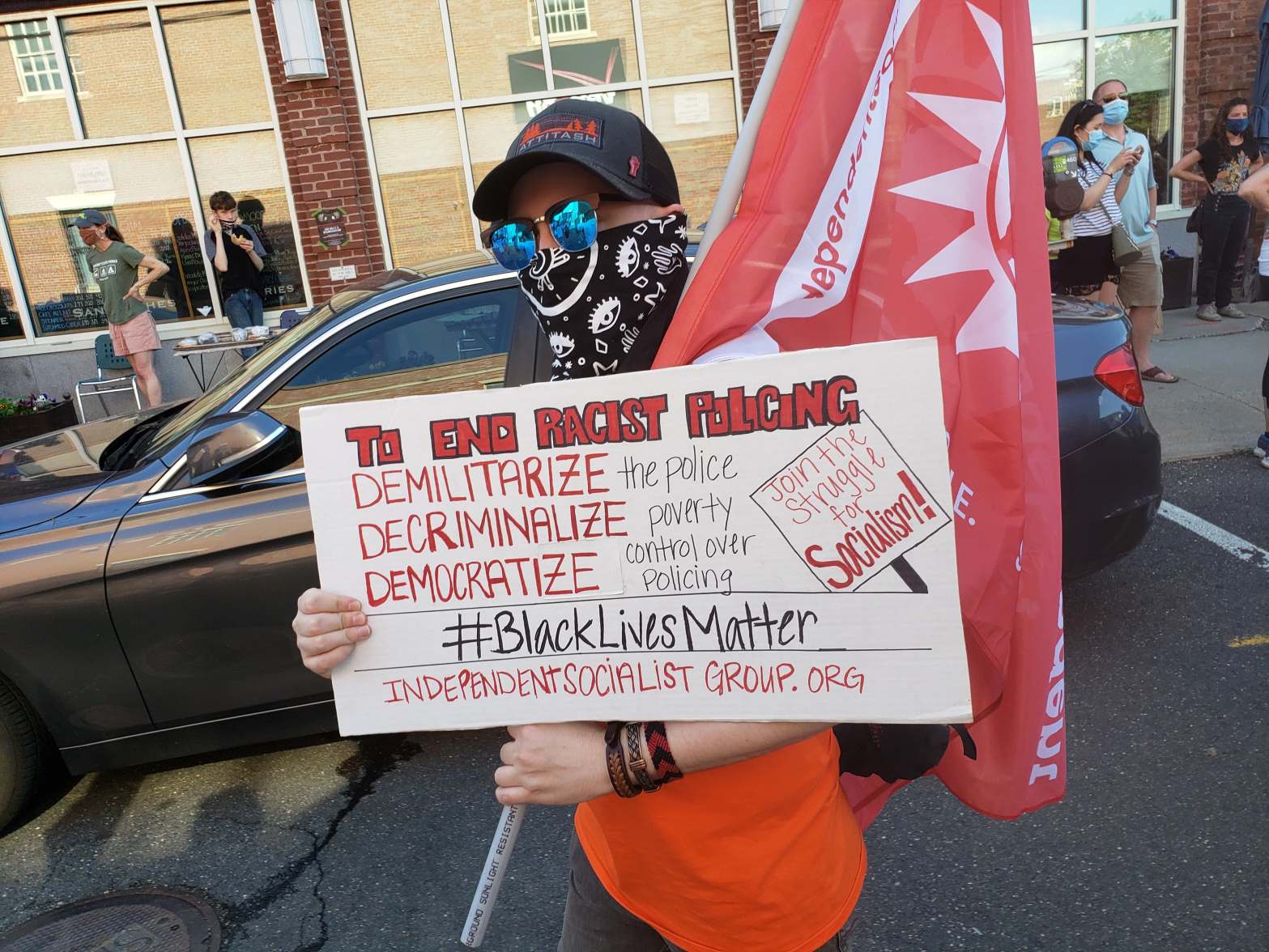
A national movement should be built to fight back against the Trump administration’s track record of dismissing systemic racism and prioritizing law-and-order responses to protests, but there are many reforms that can be won on the local and state-level. Prospective, concrete policies include demilitarizing the police;, democratically-elected civilian oversight boards that control budget, hiring, firing, and training; jailing killer cops; outlawing unwarranted electronic surveillance; and reallocating funds to support social services and livable wages over policing. Wider economic and political changes such as expanding voting rights, prison reform, and pro-worker housing policies (e.g. rent control, a massive increase in public housing) would also assist this end. Due to the increasing frustration with federal inaction and the growing recognition that reformist approaches (such as sensitivity training or body cameras) have been insufficient, the need for an energized approach to justice is clear. Workers need a radical defunding of the police, free job training programs as a step towards genuine rehabilitation, and an end to the hyper-exploitation of prison labor.
“You Can’t Have Capitalism Without Racism”—Malcolm X
In pursuit of a socialist approach to justice, we must fight for unity between the labor movement and the racial justice movement. America’s organized labor movement is weak but is gaining power. The current administration will test unions’ commitment to defending workers in the face of the state and big business united to repress them. The police have been consistent enemies of both labor and the Black community. They have always defended the interests of the ruling class, brutalizing protestors and strikers alike (but never neo-Nazis). Police “unions” should be ousted from the labor movement, as they play an actively anti-worker role that shields cops from their due accountability.
Unions have helped improve working conditions for many Black workers: a study in 2016 found that Black union workers earned 16.4% more in wages than their non-union counterparts. The union membership rate is also highest among Black workers compared to workers of other races. With coordinated labor action and access to the financial resources of unions, we could put the resources of working people toward funding a workers’ party, strike funds, unionization drives, etc. Cooperation with the labor movement would also help to center demands and power in pursuit of a jobs guarantee, cost-of-living relief, and reinvestment in our communities. We must always keep in mind that the ruling class never hesitates to exploit racism to divide workers and enforce economic disparity. Only a united working class can stand up to the capitalists who seek to separate us.
The Trump administration’s resistance to racial justice will likely fuel more direct action and civil disobedience tactics from protestors. With a federal government that might deploy aggressive tactics to suppress protests, racial justice movements could rely on non-violent civil disobedience—including strikes, blockades, and sit-ins—to disrupt the status quo. However, we must acknowledge that in the face of armed right-wing paramilitaries and rising Neo-Nazi visibility, workers have a right to defend themselves and their communities.
The 2020 wave of BLM protests was the biggest challenge that Trump faced in his first administration, and it gave the system a bloody nose. By all measures, the need for a new anti-racist mass movement is more urgent than ever. If a new wave of protests can be organized and effective organizations built, the Trump administration’s racist attacks could be beaten back and major gains won. Ultimately, defeating racism will require taking on capitalism and redistributing the wealth of society into public, democratic ownership. A socialist society, energized with the power of a multi-racial working class, could undo the damage done by centuries of racism and realize a world where liberty, justice, and resources are common to all.
 Independent Socialist Group