
by Peggy Wang
Massachusetts Teachers Association/Association of Professional Administrators (personal capacity)
Boston, MA
Workers have been making headlines by unionizing, striking, and making militant demands. But winning first contract agreements is taking longer, corporations like Amazon refuse to negotiate at all, and only one in ten US workers are in unions. Corporations use their vast amounts of money to control the two major political parties and are ready and willing to union-bust.
According to the Economic Policy Institute, employers spend over $400 million a year on union-avoidance consultants. And while the National Labor Relations Board declares it’s illegal for employers “to interfere with, restrain, or coerce employees in the exercise of their rights,” there are only a few minimal repercussions for companies that attack union organizing drives. Walmart, for example, is well-known for taking down pro-union flyers, holding workers in anti-union captive-audience meetings, and threatening employees seeking to unionize. None of its 4,700 stores are unionized, though various unions have tried.
Corporations also deliberately push high turnover to try and prevent workers from organizing. Amazon’s annual turnover rates are 150% – double the industry average. In the second unionization attempt at Amazon’s Bessemer, Alabama warehouse in 2022, just over half of workers there had been employed a year earlier when the first unionization vote was held in 2021. 31 million people, or almost 20% of the US workforce, are employed in retail and hospitality, the country’s largest job sector. Yet turnover is above 60% in the industry.
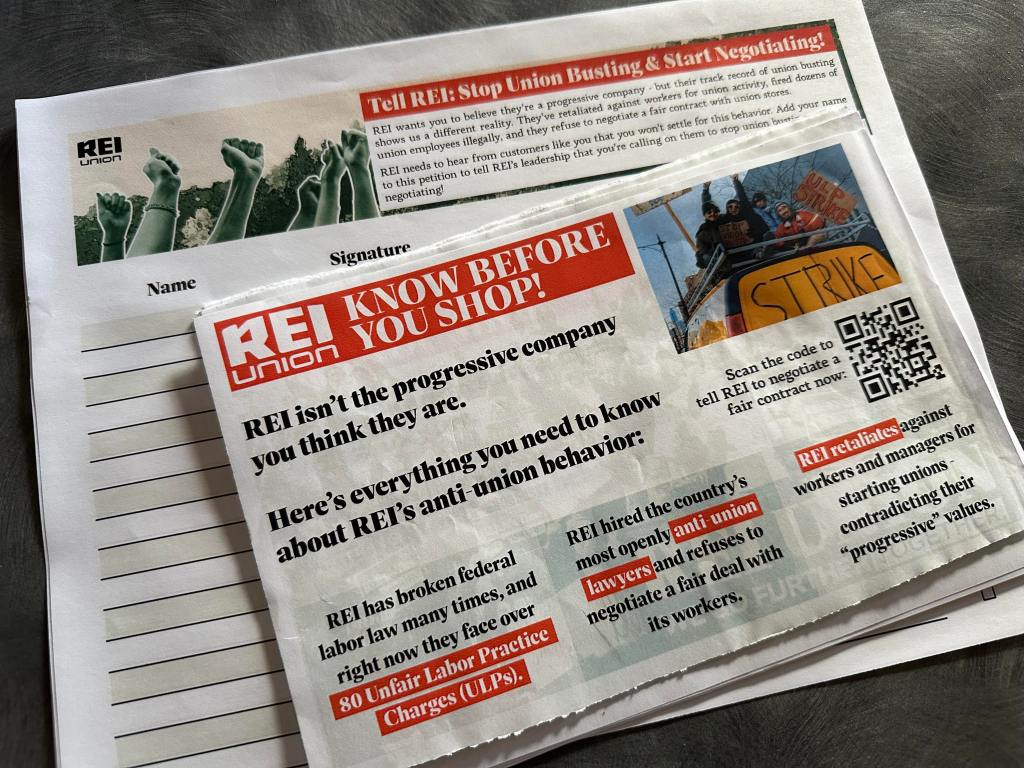
If workers can win a union, they still have to contend with negotiations for a contract. In the US there are no laws requiring a first contract. So long as employers are engaged in vaguely defined “good faith bargaining,” union members can be stuck negotiating endlessly. After a year of bargaining, 63% of unions don’t have a contract. After two years, 43% of unions still have no contract. Between 2020 and 2022, it took unions an average of over 500 days to win a first contract. Despite over 350 Starbucks stores unionizing since 2021, none have a first contract.
Established unions also face serious challenges. For one, the corporate government via its legislation and court system limits unions’ ability to strike. In 37 states, public-sector workers are banned entirely from striking; solidarity strikes have been deemed illegal since 1947 (through the Taft-Hartley Act); the Railway Labor Act (RLA) enables the government to intervene in contract negotiations, as was used by Biden and the two corporate parties in 2022 against union railroad workers. Members of the Association of Flight Attendants are currently in a contract fight but are similarly constrained by the RLA. Anti-union “right to work” legislation in 26 states makes it hard for unions to grow or negotiate contracts.
When union workers do go on strike, they often can’t receive unemployment benefits and lose healthcare coverage. Police and scabs can be brought in by companies to strike-break and ensure the company’s bottom line.
Unions also face company layoffs and workplace closures; the shifting of work to areas of the country where unions are weaker, such as in the South; the offshoring of jobs to places with cheaper labor; attacks on pay, full-time employment, pensions, and benefits; the employment of more part-time low-wage labor and, at times, even the use of the cheap or even unpaid labor of undocumented immigrants or those in prison.
Every move unions make to gain strength, the capitalist-controlled government stands in the way. To break out of the bind, one of the first steps is for the labor movement to end financial and electoral support for the Democratic and Republican parties that serve the interests of big business. Our unions need to be overtly and intentionally political but also independent of the two corporate parties and the money of the capitalists. The labor movement needs a workers’ party to take on the big corporations and their political duopoly of the Republican and Democratic Parties.
The entire US working class needs a workers’ party. Dissatisfaction with the corporate parties is high, with 63% expressing support for a third political party. Many are disgusted by the rerun of the 2020 Biden v. Trump election. The labor movement needs to be a key part of the foundation for a workers’ party. Unions are at their most popular in 60 years, enjoying 71% support and 88% among young people. The labor movement also has the financial and human resources to run campaigns that could take on candidates financed by major corporations.
Labor’s Early Attempts to Build a Political Party in the US
The US labor movement has a long history of unions initiating or being involved in independent working-class politics. This history is intentionally buried by the capitalist class and their two political parties. Beginning in the late 1800s and early 1900s, the US was affected by deep recessions, government crackdowns on strikes, and US imperialism’s push into the Spanish-American War and World War I. Parties were formed like the Anti-Monopoly Party, the Union Labor Party, the Populist Party, and the Farmer-Labor Party. These parties aimed to organize independent political power for rural and urban workers, both of whom were seeing living standards plummet as monopolies consolidated power, assisted by the Republican and Democratic Parties.
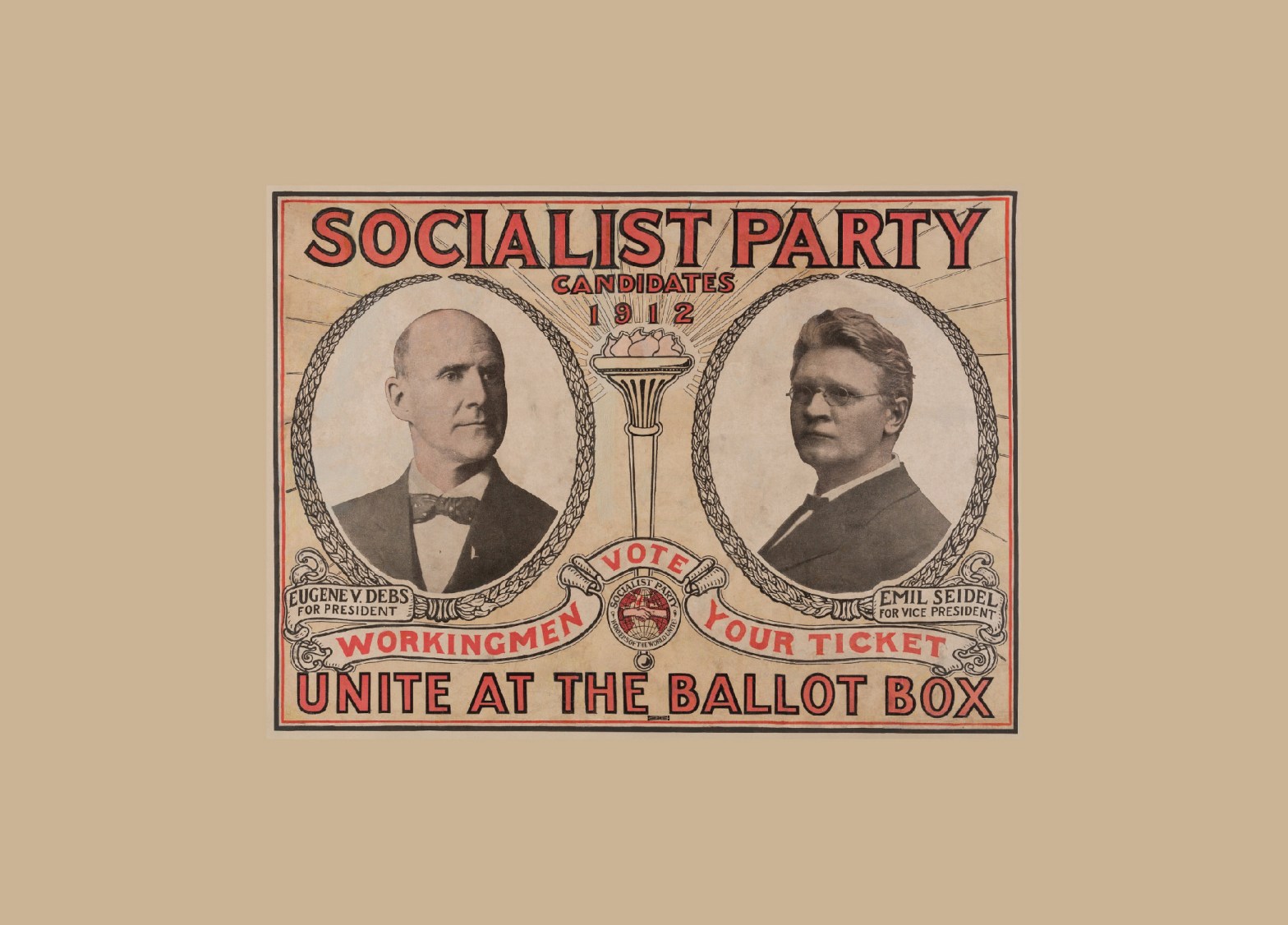
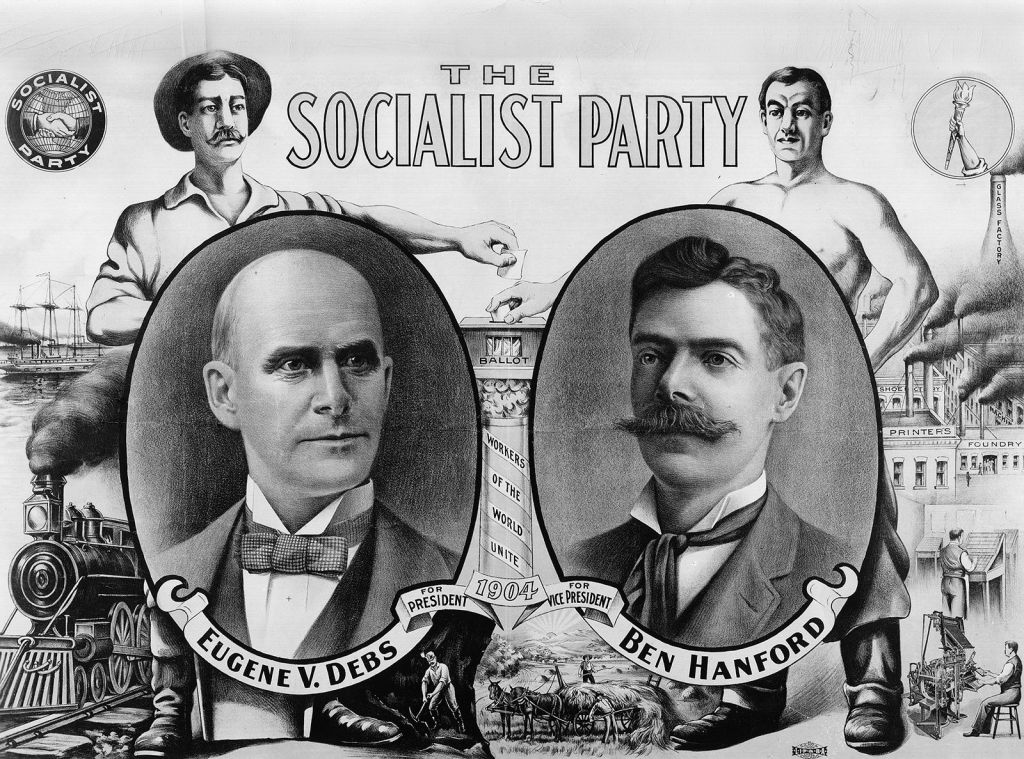
Most of the independent political parties of the late 1800s and early 1900s were short-lived or quickly buried into the two capitalist parties. The Socialist Party, established in 1901, lasted longer and grew to have mass influence in many areas of the US. The Socialist Party included urban manufacturing workers, trade unionists, progressives, populist farmers, and immigrants. It ran 358 candidates for office in 1912 alone. By 1918, it had won 1,200 political seats, including 32 state representative positions and 79 mayoral positions. Socialist Party member and former American Railroad Union strike leader Eugene Debs received almost 1 million votes in his 1912 and 1920 presidential runs. The Socialist Party campaigned on demands such as public ownership and management of banks, railroads, and mines; employment for all at union wages; shortened workdays; banning of child labor; an end to monopolies; equal right to vote for men, women, and African Americans; and education for all.
Socialist Party elected officials implemented various public works projects. Milwaukee socialist mayors constructed the first municipally-sponsored public housing project (the Garden Homes) and established the city’s first public works department and bus system. They acquired and ran municipal waste disposal and water filtration systems and constructed parks, bridges, schools, and roads. In 1911, at the state level, they succeeded in winning workman’s comp, with 9 other states following suit by the end of the year.
The CIO: Labor’s Biggest Breakthrough
In the 1930s, during the Great Depression, the labor movement grew rapidly as workers moved to organize and strike on an industrial level. In contrast to the limited craft-unionist approach of the American Federation of Labor (AFL), these militant strikes on a mass scale across entire sectors of the economy laid the groundwork to form the Congress of Industrial Organizations (CIO), established in 1935.
The CIO found its roots in 1934 in three successful general strikes. In Minneapolis, members of the Communist League of America led a strike of Teamster truck drivers, building such mass support that the strike engulfed the entire city. In Toledo, OH, union auto workers organized a strike at the Electric Auto-Lite company led by the socialist American Workers Party. On the west coast, the Communist Party played a large role when 150,000 members of the International Longshoremen’s Association and other union workers went on strike.
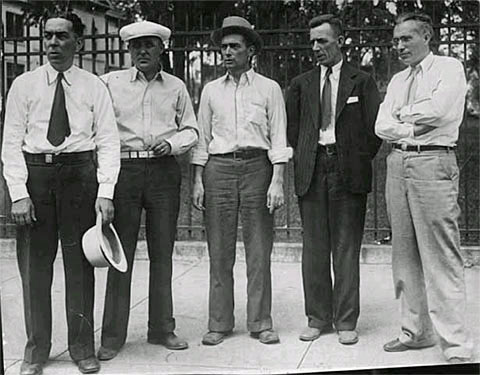
These wins gave workers confidence nationwide to organize the CIO. Membership in the CIO and the AFL rose significantly in the following years. However, this development did not translate politically into an independent party for labor, despite workers seeing a serious need for one.
Missed Opportunities for a Labor Party
Rank-and-file union members witnessed both Democratic and Republican state and local governments using the police and national guard to attack strikes. Sections of workers began to understand the need for an independent political party for labor. Many CIO members had voted Communist and Socialist in the 1932 elections. At the founding convention for the United Auto Workers (UAW) in 1936, members adopted a resolution in support of a labor party.
Many CIO and AFL leaders, including Stalinist union leaders from the Communist Party, channeled members’ votes into the Democratic Party through their newly created Labor’s Non-Partisan League (LNPL) and the American Labor Party. The LNPL, contrary to its name, raised $1,500,000 for Roosevelt’s 1936 campaign.
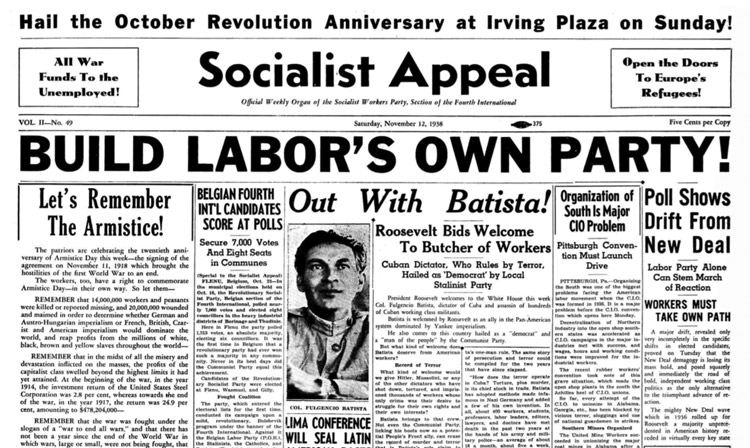
Roosevelt was portrayed as a great friend of labor. However, while appointing union bureaucrats to Democratic Party and government committees, he waged war on workers. In 1938, he cut relief spending down to $2.1 billion while amping up military spending to $6.3 billion in 1941. The day after his election in 1940, his administration approved a $123 million War Department contract to Ford. From 1933 to 1935, 77% of the National Guard members Roosevelt deployed were mobilized to break strikes. Roosevelt made private-sector strikes illegal at companies employed in war production and imposed a no-strike pledge that was readily accepted by union leadership, who were quick to police their members. He installed a wage and job freeze, labor conscription, and anti-labor laws.
Later, mass protest movements in the 1960s and 1970s mobilized and radicalized a large number of students and some workers but didn’t lead to a significant break with the Democratic Party. Unions and left groups failed to organize an electoral challenge to the corporate parties. The failure of the Civil Rights, anti-war, women’s, environmental, and gay liberation movements to join together in a political party independent of the Democratic and Republican parties was an overriding factor in subsequent decades of attacks on workers’ rights and living standards.
Wins of Workers’ Parties Internationally
Workers’ parties in other countries have been able to extract more concessions from capitalist governments than the labor movement in the U.S.
The Bolshevik Party in Russia was a mass workers’ party composed mainly of workers in the cities but won the support of both workers and the peasantry leading up to the October 1917 Revolution. The newly formed workers’ state organized democratic worker’s control over a planned economy and quickly introduced universal education, healthcare, and equal rights for women. It legalized homosexuality and abortions and granted women the right to divorce and to enter the workforce in large numbers..
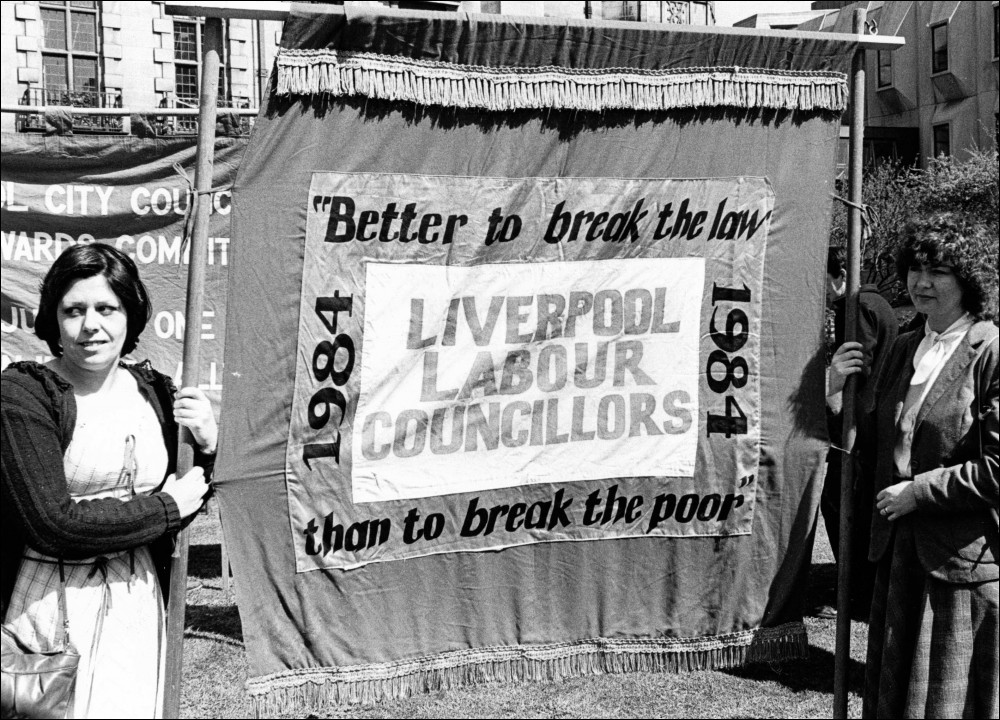
The British Labour Party implemented the 1948 National Health Service and the nationalization of major industries such as coal, steel, electricity, gas, and transportation. It even nationalized the Bank of England. In 1983, the Labour Party won control of the Liverpool city council. The Labour Party majority on the council included 14 revolutionary socialists from the Militant Tendency, part of the Committee for a Workers International. The city council majority accepted the program and leadership of the Militant Tendency and resulted in policies canceling £10 million of planned cuts and 2,000 layoffs imposed by the previous Tory-led administration and setting a budget prioritizing working people. Over the next four years, the socialist council in Liverpool implemented a large public works program, constructing 5,000 new houses and apartments as part of their public housing program and building six new nursery schools and five new sports centers. They developed apprenticeships for public jobs, at one point employing 16,000 workers on government projects. The council mobilized tens of thousands of union workers in protests to defend the policies of their council government.
In France, the Communist Party and the Socialist Party helped bring about significant rights and social benefits for working people in the 1930’s and the early 1980’s, including in 1936, when 2 million went on strike following socialist Léon Blum’s election to Prime Minister, winning the right to strike and to bargain collectively, 12 days of paid leave and a 40-hour work week for all workers, improvements to pay that led to an average of 46% in increased wages after two years, pensions for public-sector workers, and a large public works program. In the late 1940s, they helped establish social security, pensions, a national minimum wage, and expansions to public education and infrastructure, including the hiring of 1,000 public elementary school teachers. They also won the nationalization of some banks and industrial companies.
Building a Workers’ Party in the US Today
Since the Socialist Party, the US has not had a mass workers’ party. This void of independent political power for working Americans has meant a low level of social benefits in the US. Reforms like a much higher federal minimum wage, universal healthcare, the cancellation of student loans, a Green New Deal and other demands have no way forward through supporting the Democrats or Republicans.
The Green Party has run candidates against the corporate class. In 2000, Ralph Nader, who had built a career exposing corporate greed at the expense of consumer and worker safety, ran on the Green Party ticket. Both the California Nurses Association and the United Electrical Workers endorsed his campaign. Tens of thousands attended large rallies where he denounced “a government of the Exxons, by the General Motors, for the Duponts” and called for healthcare and childcare for all, more union rights, and guaranteed paid sick leave. He received nearly 3 million votes in the election. Green Party Presidential candidate Howie Hawkins ran in 2020 as an open socialist, putting forward a strong platform for a socialist Green New Deal.
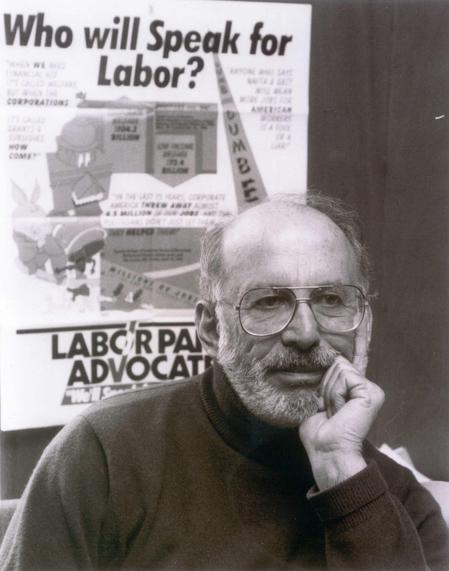
In the 1990s, a Labor Party effort was started by Tony Mazzochi, president of the Oil, Chemical and Atomic Workers Union. Other unions officially joined the new party, including the United Electrical, United Mine Workers, International Longshore and Warehouse Union, and hundreds of union locals. The party never got off the ground because most labor leaders involved in the effort refused to run candidates and deferred, yet again, to Democratic Party corporate politicians.
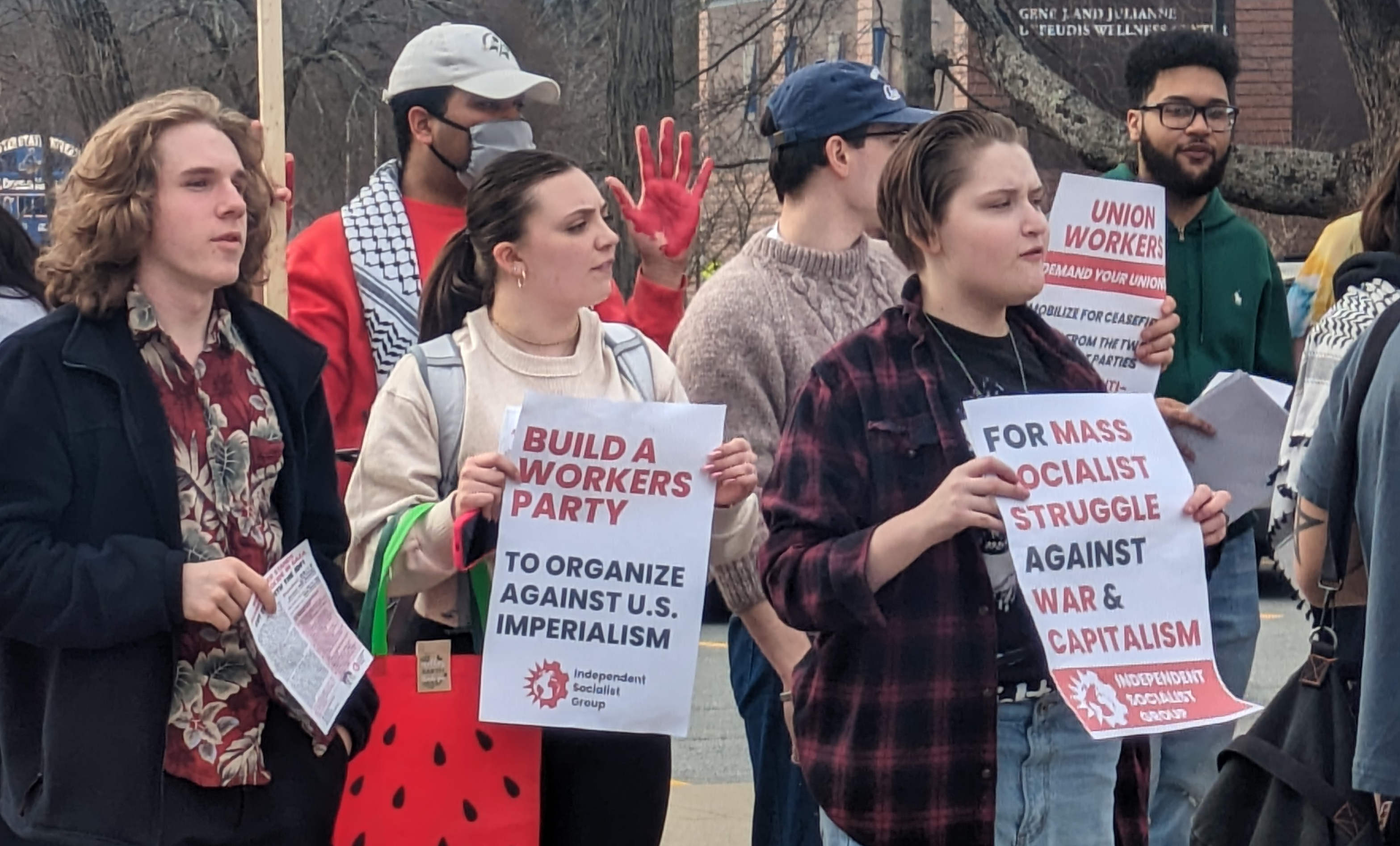
The labor movement needs to take hold of the current favorable conditions to help develop a workers’ party. Unions can lead the building of a movement to support the best independent progressive or left campaigns in the 2024 elections. Union-led efforts behind independent pro-worker candidates could connect with other individuals and groups moving away from supporting either of the corporate parties. A strong movement for a workers’ party, regardless of the outcome of this year’s elections, will mean workers will be better prepared to challenge the capitalist parties in the coming years. A workers’ party would also be crucial for a stronger, more unified labor movement to win immediate progressive demands. The Independent Socialist Group will be part of the effort to build a workers’ party.
A Workers’ Party Program
- Build the strongest possible contract campaigns in all union workplaces. Fight for big improvements in wages, benefits, and conditions to set the standard for all workers
- Unite all the unions to pool resources to organize the biggest non-union employers, including reviving the idea of striking for union recognition
- Build labor-community solidarity committees where other workers and youth can get involved in labor battles to support workers in struggle
- Organize mass rallies, protests, mobilizations, and other actions to win workers demands
- Run independent, working-class candidates to fight for a program democratically decided by affiliated unions and individual members. Officers, staff, and elected officials should be subject to recall and restricted to the salary of the average worker.
- Overturn anti-union laws and restrictions on militant tactics, and fight to make it easier to organize unions
- Fight for reforms that benefit the whole working class, like a $25/hr minimum wage, universal healthcare, expansion of public housing and transit, green energy and industry, and more
- Unions should be on the forefront of fighting back against racism, sexism, LGBTQ-phobia, and all forms of oppression
 Independent Socialist Group